
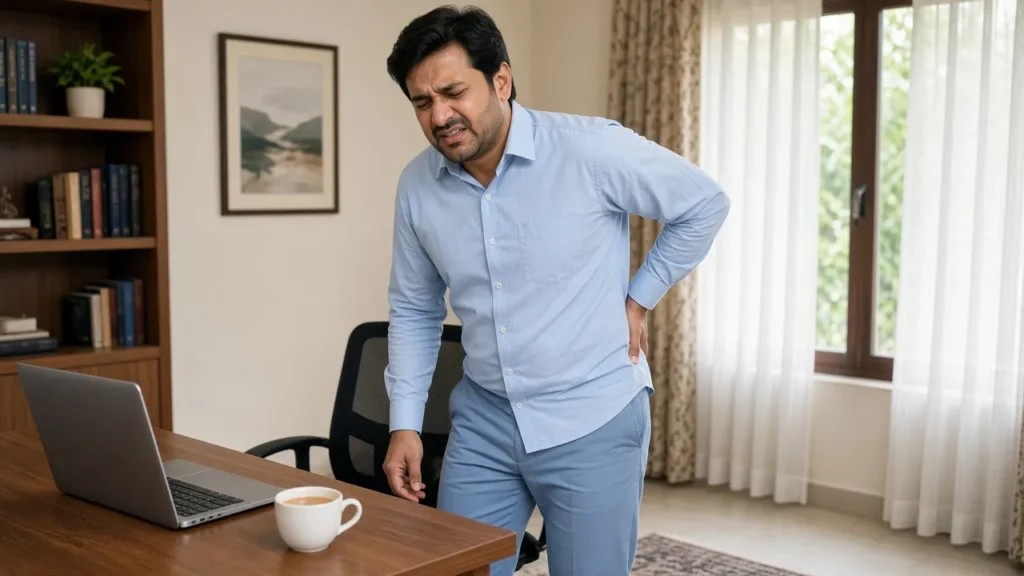
Short answer: Sciatica exercises at home work best when they are gentle, regular and part of staying active. Useful starting points include knee-to-chest stretches, pelvic tilts, a lying buttock stretch, gentle back extensions if they ease the leg pain, nerve glides and short, frequent walks. Avoid long bed rest, heavy lifting and any movement that sends pain further down the leg. Most sciatica improves within a few weeks to a few months. Get emergency help if you have numbness around the genitals or back passage, new bladder or bowel problems, or weakness in both legs.
This guide is general information. It is not medical advice and does not replace an assessment by a doctor or physiotherapist. Stop any exercise that makes leg symptoms worse or spread further down the leg.
Listen to a short overview
73 seconds · a spoken summary of this guide. It does not replace an assessment by a doctor or physiotherapist.
Key takeaways
- Sciatica is pain from an irritated sciatic nerve. It is felt in the buttock and down the back of one leg, often with tingling or numbness.
- The NHS says it usually gets better in a few weeks to a few months. Staying active helps; long bed rest does not.
- Gentle exercises that ease or centralise leg pain are a good sign. Exercises that push pain further down the leg should be stopped.
- Emergency signs include numbness around the genitals or anus, bladder or bowel changes and weakness in both legs.
- A physiotherapist can find which movements help your back. IRHC offers physiotherapy at home in Islamabad and Rawalpindi.
In this guide
For some it begins after lifting a 19-litre water bottle onto the dispenser. For others it creeps in after weeks of long office days, a long drive on the motorway, or a motorbike commute over potholed roads. First the lower back feels tight. Then a burning, electric pain shoots through the buttock and down the back of the leg, sometimes all the way to the toes. Sitting through a meeting is miserable, sneezing hurts, and getting up after sujood feels like a test.
That is sciatica, and it is one of the most searched pain problems for good reason. It is painful, scary and disruptive. It is also, in most cases, a problem that settles with time and the right kind of movement. This guide explains what sciatica is, which sciatica exercises at home are commonly used and how to tell if they suit you, what the research says about treatments, what to avoid, and the warning signs that need emergency care. It finishes with how to get home physiotherapy in Islamabad and Rawalpindi.
What is sciatica, and what causes it?
Sciatica is pain caused by irritation or pressure on the sciatic nerve, which runs from the lower back through the buttock and down the back of each leg. A slipped (herniated) disc is the most common cause.
The NHS lists the typical symptoms: a sharp or burning pain down the back of the leg, pins and needles, numbness and sometimes weakness, usually in the buttock and one leg, often reaching the foot and toes. The pain may be worse when moving, sneezing or coughing. You may also have back pain, but it is usually less severe than the leg pain. If you only have back pain, it is probably not sciatica.
Common causes
- Slipped disc. A soft cushion between the spinal bones bulges and presses on a nerve root. The NHS says this is the most common cause and it is more likely as you get older.
- Spinal stenosis. Narrowing of the space where nerves pass, more common in older adults. Leg pain often comes on with walking and eases on sitting or bending forward.
- Spondylolisthesis. One vertebra slips forward on another.
- A back injury.
“Sciatica” is a symptom, not a diagnosis
Many people in Pakistan use the word “sciatica” for any pain in the leg. Pain in the buttock and thigh can also come from the hip joint, the sacroiliac joint or tight muscles, and these respond to different exercises. That is why it is worth having an assessment if the pain is severe or not improving, rather than following a random video.
How long does sciatica take to heal?
The NHS says sciatica usually gets better in a few weeks to a few months, although it can last longer and may come back. Staying active and doing gentle exercises supports recovery.
A herniated disc can shrink and settle on its own over time as the irritation calms down. Most people do not need surgery. The National Institute for Health and Care Excellence (NICE) also advises doctors not to routinely order imaging such as an MRI in non-specialist settings, because scans often show changes that do not explain the pain and rarely change the first steps of treatment. A scan becomes important when a specialist is considering an injection or surgery, or when there are warning signs.
| Approach | What guidance says | Practical point |
|---|---|---|
| Staying active | NHS: carry on with normal activities as much as possible | Movement that hurts is not usually harmful |
| Bed rest | NHS: do not sit or lie down for long periods | Lie down for short breaks only |
| Exercise | NHS and NICE recommend exercise as a core treatment | Gentle and regular beats intense and occasional |
| Heat | NHS suggests heat packs on painful areas | Hot water bottle wrapped in a towel |
| Manual therapy (massage, manipulation) | NICE: consider only as part of a package that includes exercise | Massage alone is not enough |
| Belts, traction, TENS, ultrasound, acupuncture | NICE: do not offer for low back pain with or without sciatica | Save your money and time |
| Painkillers | NHS: paracetamol is unlikely to help; benefit of NSAIDs unclear. NICE advises against gabapentinoids for sciatica | Discuss medicines with your doctor; do not stop prescribed medicines suddenly |
Summary of NHS and NICE NG59 guidance. Your doctor or physiotherapist will tailor advice to you.
How do you do sciatica exercises at home safely?
Start gently, move within comfort, and watch where the pain goes. If leg pain eases or moves up towards the back, the exercise is likely helping. If it spreads further down the leg or numbness increases, stop that exercise.
Physiotherapists often use a simple rule: watch the leg, not just the back. When an exercise makes leg pain retreat towards the lower back, even if the back aches a bit more for a while, that is usually a good sign. When an exercise sends pain, tingling or numbness further towards the foot, that movement is irritating the nerve and should be stopped or changed.
- Warm up. A warm shower or a heat pack wrapped in a towel can relax muscles before exercise.
- Little and often. Short sessions spread through the day suit an irritated nerve better than one long workout.
- Breathe and move slowly. No bouncing or jerking. Hold stretches gently.
- Choose a firm surface. A yoga mat or a rug on the floor, or a firm bed, works better than a soft, sagging mattress.
- Keep walking. Short, frequent walks are among the simplest and best things you can do.
The repetitions below are general starting points used in many home programmes. A physiotherapist may change them after assessing you.
Which sciatica exercises at home are most commonly recommended?
Common home exercises include knee-to-chest stretches, pelvic tilts, a lying buttock stretch, prone press-ups for some disc problems, seated nerve glides and gentle walking. Not every exercise suits every person.
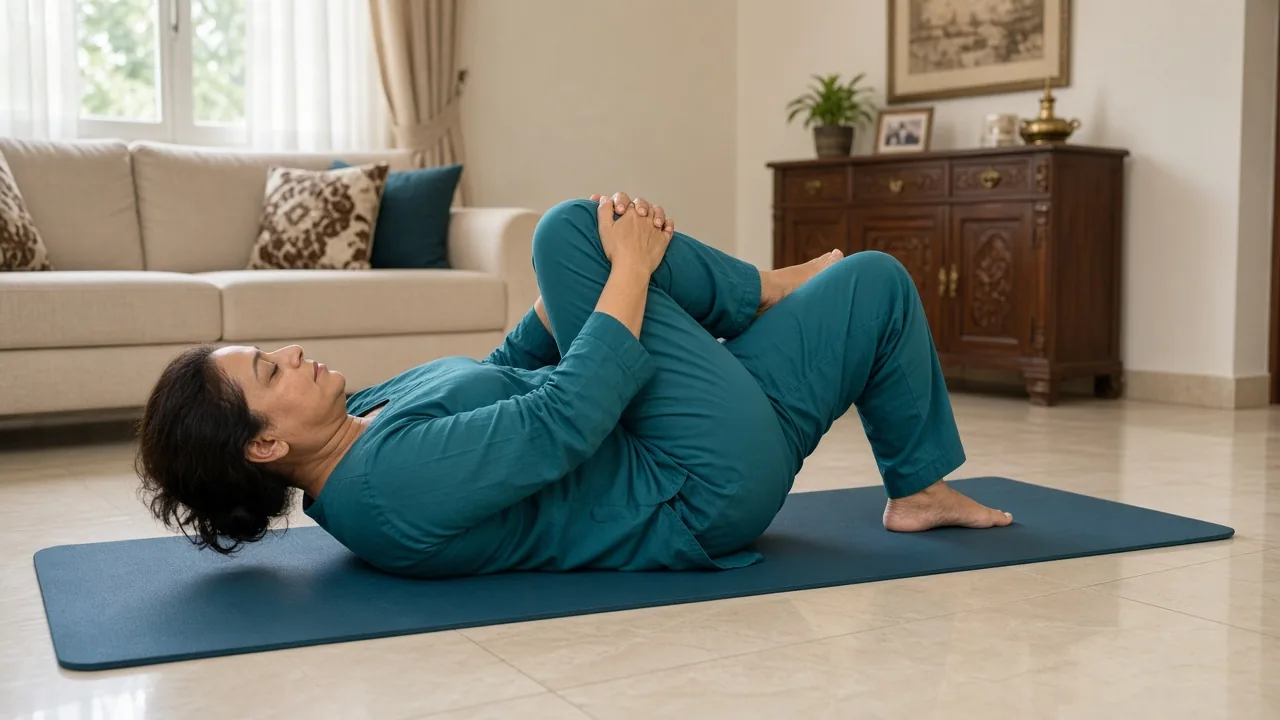
1. Single knee to chest
Lie on your back with both knees bent and feet flat. Gently bring one knee towards your chest, holding behind the thigh, until you feel a comfortable stretch in the lower back and buttock. Hold for about 20 to 30 seconds and lower slowly. Repeat 2 to 3 times on each side. Some people prefer bringing both knees up together.
2. Pelvic tilt
Lying on your back with knees bent, gently flatten the small of your back into the floor by tightening your tummy muscles and tilting your pelvis. Hold for about 5 seconds and relax. Repeat about 10 times. It is a small movement that wakes up the deep muscles around the spine.
3. Lying buttock (piriformis) stretch
Lie on your back with knees bent. Cross the ankle of the painful leg over the opposite knee, like a figure four. Hold the thigh of the lower leg and gently pull it towards your chest until you feel a stretch deep in the buttock of the painful side. Hold for about 20 to 30 seconds. Stop if it increases tingling down the leg.
4. Prone press-up (back extension)
Lie face down and rest on your forearms for a minute or two. If that feels fine, place your hands under your shoulders and gently straighten the arms to lift your upper body, keeping your hips on the floor and your back relaxed. Lower slowly. Repeat about 10 times. Many people with a disc problem find this centralises their leg pain. People with spinal stenosis often find it uncomfortable. If it pushes pain further down the leg, stop and ask a physiotherapist.
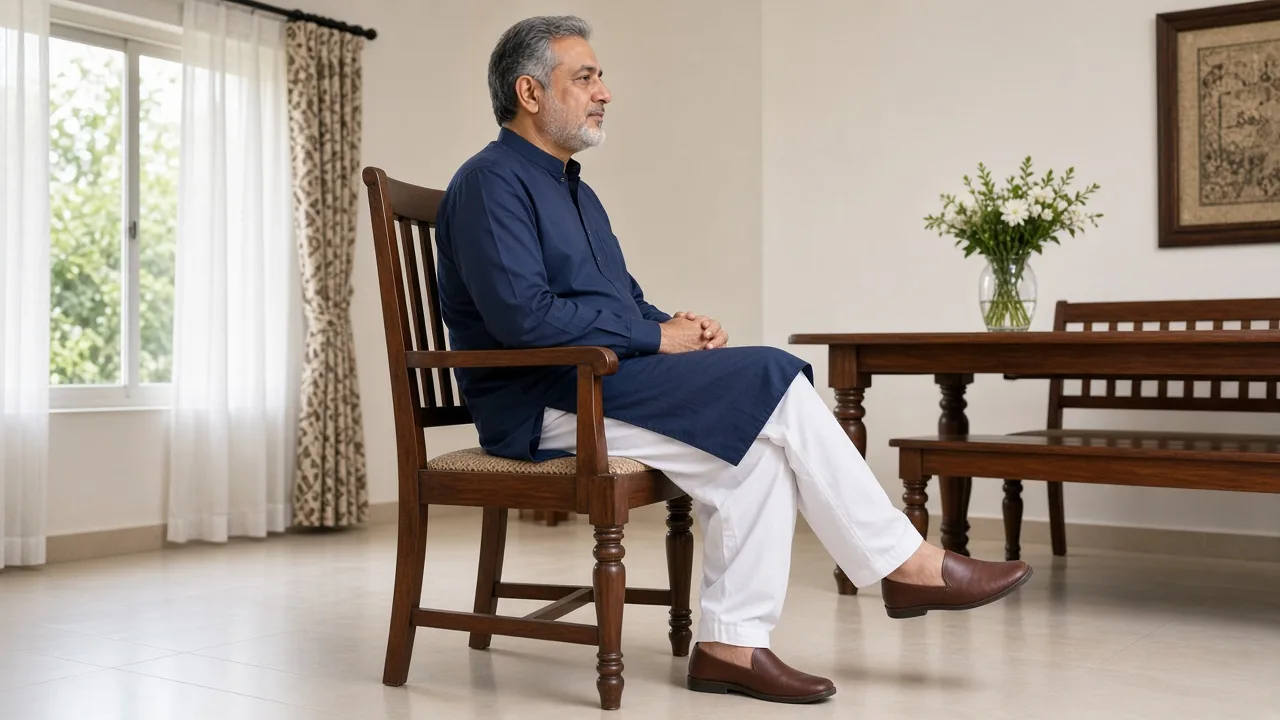
5. Seated nerve glide
Sit upright on a chair. Slowly straighten the knee of the painful leg while pointing your toes up and lifting your head to look up. Then bend the knee back down as you look down. The movement should be smooth and only mildly tense, not painful. Repeat about 10 times. The aim is to let the nerve slide gently, not to stretch it hard. The 2025 review below found that exercise combined with this kind of neural mobilisation was among the options linked with short-term leg pain relief, though the evidence was weak.
6. Cat and camel (on hands and knees)
On hands and knees, slowly round your back up towards the ceiling, then let it gently dip down, moving within comfort. Repeat about 10 times. This keeps the spine moving without load.
7. Walking
Short walks around the house, the lawn or the street, several times a day, keep you moving without overloading the back. Build up gradually. If you have spinal stenosis, walking with a slight forward lean, such as pushing a trolley, or using a static bike may be easier.
Which exercises and habits should you avoid with sciatica?
In the painful phase, avoid long bed rest, heavy lifting, twisting with a load, deep forward bending under strain, hard hamstring stretches and high-impact exercise. Avoid any exercise that makes leg symptoms spread.
- Toe-touching and aggressive hamstring stretches. Pulling hard on a sensitive nerve often makes it angrier.
- Heavy lifting and twisting. Ask someone else to lift the water bottle, gas cylinder or child for a while, and turn your feet rather than twisting your back when you must lift.
- Sit-ups and straight-leg raises. These can load the irritated area early on.
- Long sitting. Get up every 30 to 45 minutes at work or on a long drive. Stop the car for a short walk.
- Running and jumping until the pain is settling and a physiotherapist has guided your return.
- Long bed rest. Short breaks are fine; days in bed are not.
Sitting, sleeping, prayer and travel
Sitting: choose a firm chair with a back, feet flat, and a small rolled towel in the small of the back if it helps. Sleeping: on your side with a pillow between your knees, or on your back with pillows under the knees. A badly sagging mattress or charpai may worsen symptoms. Prayer: if bending for ruku or getting up from sujood is very painful, many people pray seated on a chair for a while; ask a scholar if you have religious questions. Travel: a motorbike ride on rough roads jars the spine; if you can, take short car trips with breaks instead during a bad flare.
What treatments work for sciatica besides exercise?
Exercise, staying active and time are the basis of care. Physiotherapy, some medicines, injections and, occasionally, surgery are options when pain is severe or does not settle. No single non-surgical treatment has been proven clearly better than the others for long-lasting sciatica.
The NHS lists exercises and stretches, painkillers and physiotherapy (including manual therapy) as the main treatments. If severe pain does not improve, a specialist may consider an epidural steroid injection, radiofrequency denervation, or decompression surgery.
It helps to know how uncertain the evidence is. A 2025 systematic review with network meta-analysis in the Journal of Pain (Zhu and colleagues) pooled 50 randomised trials with 4,920 adults with sciatica lasting three months or more. Some options, including spinal manipulation, exercise with neural mobilisation and certain injections, showed short-term leg pain relief compared with placebo, but the confidence in all of these results was very low. The authors concluded that no high-quality evidence shows any non-surgical treatment is clearly better than the others for chronic sciatica.
In practice, that means two things. First, be cautious of anyone promising a guaranteed fix in a few sessions. Second, a sensible plan built around graded exercise, activity and good pain control, adjusted by a physiotherapist to your response, is a reasonable and low-risk approach.
A word about medicines
NICE advises against gabapentinoids (such as pregabalin and gabapentin), other antiepileptics, oral steroids and benzodiazepines for sciatica because there is no overall evidence of benefit and there is evidence of harm. It also advises against opioids for long-lasting sciatica. If you are already taking any of these, do not stop suddenly; talk to your doctor about the plan.
What are the most common mistakes people make with sciatica?
The usual mistakes are resting in bed for days, copying aggressive stretches from videos, relying only on massage or belts, asking for an MRI too early, and stopping exercise once the pain eases.
- Days of bed rest. It weakens the back and slows recovery.
- Forcing stretches. More stretch is not better for an irritated nerve.
- Relying on massage, cupping or a “malishia” alone. NICE recommends manual therapy only as part of an exercise programme.
- Wearing a back belt all day. NICE advises against belts and corsets for this problem.
- Rushing to an MRI. Without warning signs, a scan rarely changes the first steps.
- Stopping once it feels better. The NHS notes sciatica can come back. Keep exercising, lift safely, watch your posture and stay active.
- Ignoring warning signs. Bladder, bowel or saddle numbness symptoms are an emergency.
When is sciatica an emergency, and when should you see a doctor?
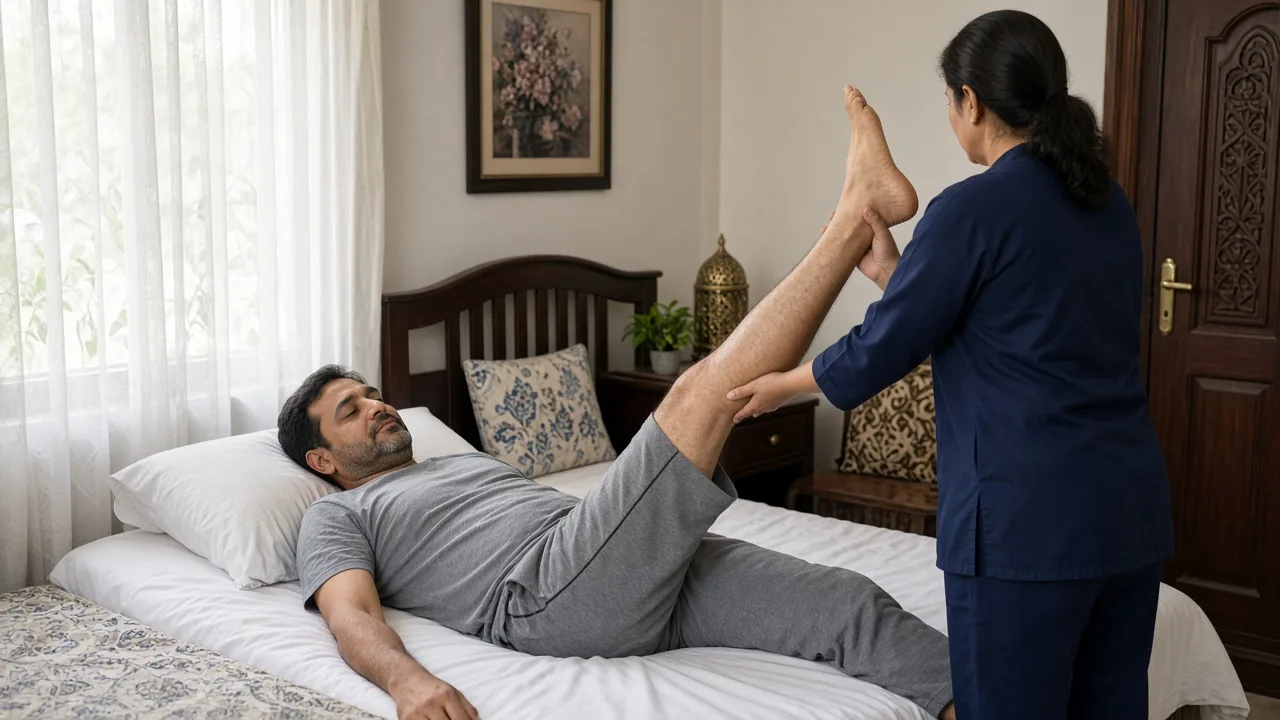
Go to an emergency department immediately if you have sciatica on both sides, severe or worsening weakness or numbness in both legs, numbness around the genitals or anus, or new problems controlling or passing urine or stool. See a doctor if pain is not improving after a few weeks or is getting worse.
The NHS describes these as signs of a serious back problem, such as cauda equina syndrome, that needs hospital treatment as soon as possible. In Islamabad and Rawalpindi, go to the nearest hospital emergency department or call Rescue 1122. Do not wait to see if it settles.
See a doctor or physiotherapist soon if:
- the pain has not improved after a few weeks of home treatment;
- it is getting worse or stopping you from working or caring for your family;
- you have a foot that drags, slaps or feels weak;
- you also have fever, unexplained weight loss, a history of cancer, or the pain followed a significant fall or accident.
Where can you get sciatica physiotherapy at home in Islamabad and Rawalpindi?
Islamabad Rehabilitation and Hearing Center (IRHC) provides physiotherapy at home across Islamabad and Rawalpindi for back pain and sciatica.
When sitting in a car is the most painful part of your day, travelling to a clinic can make the leg worse before treatment even starts. Our physiotherapy service comes to you. A physiotherapist can assess your back and leg, check for warning signs, work out which movements ease your symptoms, and build a home programme you can follow between visits. A female physiotherapist is available on request. You can read more about what physiotherapy involves in our article on the benefits of physiotherapy in Islamabad.
When you contact us, tell us how long you have had the pain, whether it goes below the knee, what makes it better or worse, and the area where you live.
Want a physiotherapist to check your sciatica at home?
Book a home visit in Islamabad or Rawalpindi for an assessment and a personal exercise plan. For fees, timings and payment, see our FAQs. For fees, timings and payment, see our FAQs.
Book an appointment | WhatsApp 0300-6844361 | Call 051-8776556
Frequently Asked Questions
Answers to common questions about sciatica and home exercise. For fees, timings and payment, see our FAQs page.
What is the best exercise for sciatica?
There is no single best exercise. The right one depends on the cause. Gentle knee-to-chest stretches, pelvic tilts, nerve glides and walking suit many people; prone press-ups help some disc problems. A movement that eases or centralises leg pain is a good choice for you.
How long does sciatica last?
The NHS says it usually gets better in a few weeks to a few months, but it can last longer and can come back.
Is walking good for sciatica?
Yes, for most people. Short, frequent walks keep the back moving. Build up gradually and stop if the leg pain spreads. People with spinal stenosis may find walking with a slight forward lean easier.
Should I rest in bed with sciatica?
No. The NHS advises against sitting or lying down for long periods. Short rests are fine, but staying active helps recovery.
What should I avoid with sciatica?
Avoid heavy lifting, twisting while lifting, aggressive hamstring stretches, sit-ups early on, long sitting without breaks and any exercise that makes the leg symptoms worse.
What is the best sleeping position for sciatica?
Many people are most comfortable on their side with a pillow between the knees, or on their back with pillows under the knees. A firm, supportive surface usually helps more than a soft, sagging one.
Do I need an MRI for sciatica?
Usually not at first. NICE advises against routine imaging in non-specialist settings. An MRI is useful if there are warning signs or a specialist is considering an injection or surgery.
Does pregabalin help sciatica?
NICE advises against gabapentinoids such as pregabalin and gabapentin for sciatica, citing no overall evidence of benefit and evidence of harm. If you are taking one, do not stop suddenly; speak to your doctor.
When is sciatica an emergency?
Go to an emergency department at once if you have sciatica on both sides, severe or worsening weakness in both legs, numbness around the genitals or anus, or new bladder or bowel problems.
How much does home physiotherapy cost in Islamabad or Rawalpindi?
At IRHC, a first or single physiotherapy home visit is Rs 3,000. Packages are discounted: 10% off 5 sessions and 15% off 10 sessions. Payment is made in advance, once your appointment is confirmed, by Easy Paisa, JazzCash, U Paisa, Raast ID, bank transfer or cash.
How do I book physiotherapy for sciatica at home?
Call 051-8776556 (9 am to 6 pm), WhatsApp 0300-6844361 (answered 24/7), or use the online appointment form. Home visits run 9 am to 9 pm, Monday to Sunday. A female physiotherapist is available on request, and every booking is confirmed on WhatsApp.
Medical disclaimer: This article is for general information only. It does not replace an assessment by a doctor or physiotherapist. Numbness around the genitals or anus, bladder or bowel changes or weakness in both legs need emergency care.