Short answer: Autism speech therapy at home helps a child understand others, show what they want, and connect through play and everyday routines, while coaching the family to do the same. Early signs often show up in communication: not answering to their name, few gestures, repeating phrases, or losing words. These signs are a reason for an assessment, not a diagnosis. Therapy does not cure autism and is not meant to change who your child is.
This guide is general information for parents. It is not a diagnosis or medical advice. If you are worried about your child’s development, speak to a doctor or a qualified specialist.
Listen to a short overview
49 seconds · a spoken conclusion of this guide. It does not replace an assessment.
Key takeaways
- Early autism signs are often less about how many words a child has and more about how they connect: looking, pointing, showing, responding to their name and back-and-forth play.
- Losing words or social skills a child used to have is a reason to see a doctor soon, not to wait.
- Picture boards, signs and speech apps (AAC) do not stop a child from talking. Repeating lines (echolalia) often means something.
- IRHC provides speech therapy at home in almost all areas of Islamabad and Rawalpindi, Monday to Sunday, and by video call.
In this guide
Most parents don’t start with the word autism. They start with a small moment that keeps coming back: a son who never turns when his name is called, a daughter who recites a whole cartoon song but can’t ask for water, a relative at a wedding saying “he’ll talk when he’s ready.” Then, late one night, the search becomes “autism speech therapy near me.”
If your main question is whether your toddler is simply a late talker, our late talker guide covers that in detail. This post picks up from there. It explains what autism-related communication differences can look like at home, what a speech therapist actually does in in-home autism therapy, and what therapy can and cannot promise.
What are the early signs of autism in speech and communication?
Early signs often include not responding to their name, using few gestures such as waving or pointing, not showing you things they find interesting, repeating words or phrases, using words to name things but not to ask, and losing words they used to say. One sign on its own does not mean autism. A pattern of several is a reason to get an assessment.
The CDC’s list of autism signs and the American Academy of Pediatrics both point to the social side of communication as the place to look first. Families often notice:
- With people: not turning to their name by around 9 months, few shared smiles or expressions, not playing simple games like peekaboo by about 12 months, not pointing to show you something by 18 months.
- With words: words used to label things but not to ask, long phrases copied from TV or adults, a flat or sing-song tone, or talking “at” people rather than with them.
- With play and routine: lining up toys, playing the same way every time, strong upset at small changes, strong reactions to sounds, textures or lights.
- Loss of skills: the AAP notes that some children develop early words and then stop using them, often between 15 and 24 months. If this happens, speak to a doctor soon.
Every autistic child is different. The NHS points out that many autistic children won’t show all of these signs, and that girls in particular may copy other children and be quiet in hard situations, so signs are easier to miss. A late talker who is not autistic often still drags you to the window to show you a bird and checks your face to see you looked. That sharing is what therapists watch for, alongside word count.
What do these signs mean, and how can speech therapy help?
Most of these behaviours are your child’s way of communicating with the skills they have right now. A speech therapist works out what each behaviour is doing for your child, then builds on it, adding clearer and easier ways to be understood rather than trying to stop the behaviour.
| What you might notice | What it can mean | How a speech therapist may help |
|---|---|---|
| Does not turn when you call their name | Can be a sign of social attention differences. It can also be a hearing problem, so hearing should be checked too. | Games that make your voice worth turning for, like peekaboo or a favourite song paused at the best part. |
| Pulls your hand to the fridge instead of pointing | Your child knows what they want and is asking in their own way. Pointing and showing may not have developed yet. | Building on that request: a gesture, a sign, a picture or a word that gets the same result faster. |
| Repeats lines from cartoons or things you said (echolalia) | Often meaningful. A repeated line can be a request, a protest, a comment or a way to calm down. | Working out what each line means to your child, then modelling simple, flexible phrases from it. |
| Few or no spoken words | Many causes are possible. Spoken words are only one way to communicate. | Gestures, signs, picture boards or a speech app (AAC) alongside spoken language, never instead of it. |
| Big meltdowns when plans change | Changes can feel unpredictable and overwhelming. The child may not yet have a way to say “I’m not ready.” | Visual “first, then” cards, simple warnings before changes, and teaching a way to ask for a break. |
| Talks a lot about one topic but finds back-and-forth hard (older children) | Language may be strong while the social side of conversation, like turn-taking or reading tone, is harder. | Conversation practice around their interests, understanding jokes and hints, and friendship situations. |
Speech therapists also look at feeding when it is linked to communication or texture difficulties. ASHA’s guidance for speech-language pathologists lists feeding, social communication and AAC among the areas they assess and support for autistic people.
Who diagnoses autism, and where does a speech therapist fit in?
Autism is usually diagnosed by a developmental paediatrician, a child psychiatrist or a psychologist, often working as a team. A speech therapist assesses communication in detail, shares what they see, suggests a referral if needed, and can start communication support while the diagnosis process goes ahead.
Start with your child’s doctor. Ask about a developmental assessment and a hearing check, because hearing loss can look like “not listening.” If a full assessment takes time to arrange, you don’t have to wait to start helping your child communicate, and a speech therapist’s notes can be useful to the team who assesses your child later.
At IRHC, our role is speech and language therapy: we assess and support communication, and we will tell you honestly if we think another specialist should see your child.
How does speech therapy at home help an autistic child?
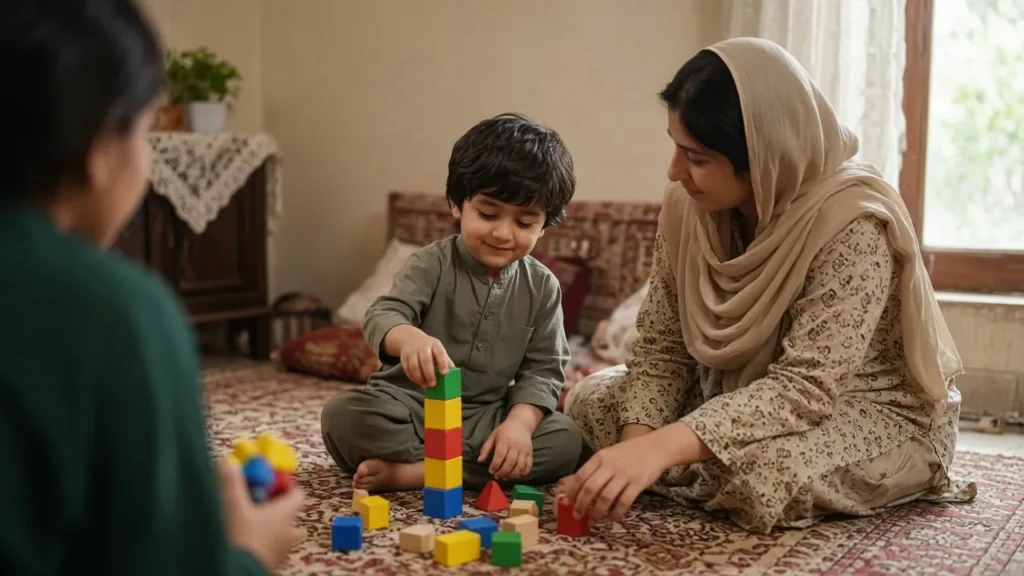
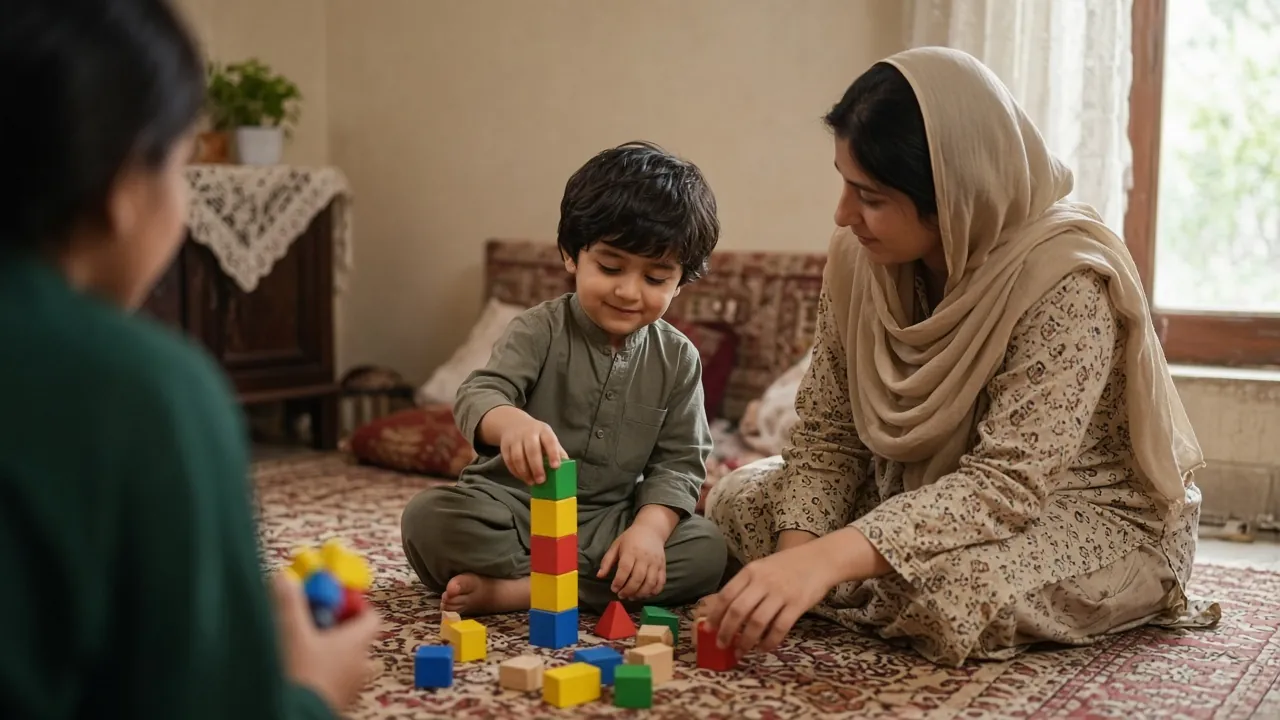
Home therapy works on communication in the places your child already uses it: the lounge floor, the dining table, bath time, the walk to the car. The therapist follows your child’s interests, sets small goals with you, and coaches everyone at home to use the same simple strategies every day.
Depending on the child, goals might include:
- Understanding simple words and instructions in daily routines
- Asking for things, and saying “no” or “stop” in a clear, safe way
- Sharing attention and taking turns in play
- Gestures, signs, pictures or a speech app alongside spoken words
- Conversation skills for older children who already talk, and mealtime concerns where relevant
Home has real advantages: no traffic, no noisy waiting room, no new place to get used to first. Grandparents, siblings and whoever feeds the child at lunchtime can watch and learn, which matters because a child spends a few hours a week with a therapist and the rest with family. Progress differs for every child, so goals are reviewed regularly.
What happens in the first home visit?
The first visit is mostly an assessment through play and conversation. The therapist watches how your child plays, asks for things and reacts to people, asks you about development, sleep, food and the languages spoken at home, and ends with a few starting goals and one or two things to try that week.
Expect the therapist on the floor with your child, not at a desk with tests. It helps to have ready:
- Two short phone videos: one of your child at their happiest, one of a hard moment. Children often act differently with a new person in the room.
- How your child asks for things now, even if it is pulling a hand or bringing you an empty cup.
- Favourite things and any reports: the toy, snack or cartoon that always gets attention (these become therapy tools), plus any doctor or hearing reports.
Will pictures, signs or a tablet stop my child from talking?
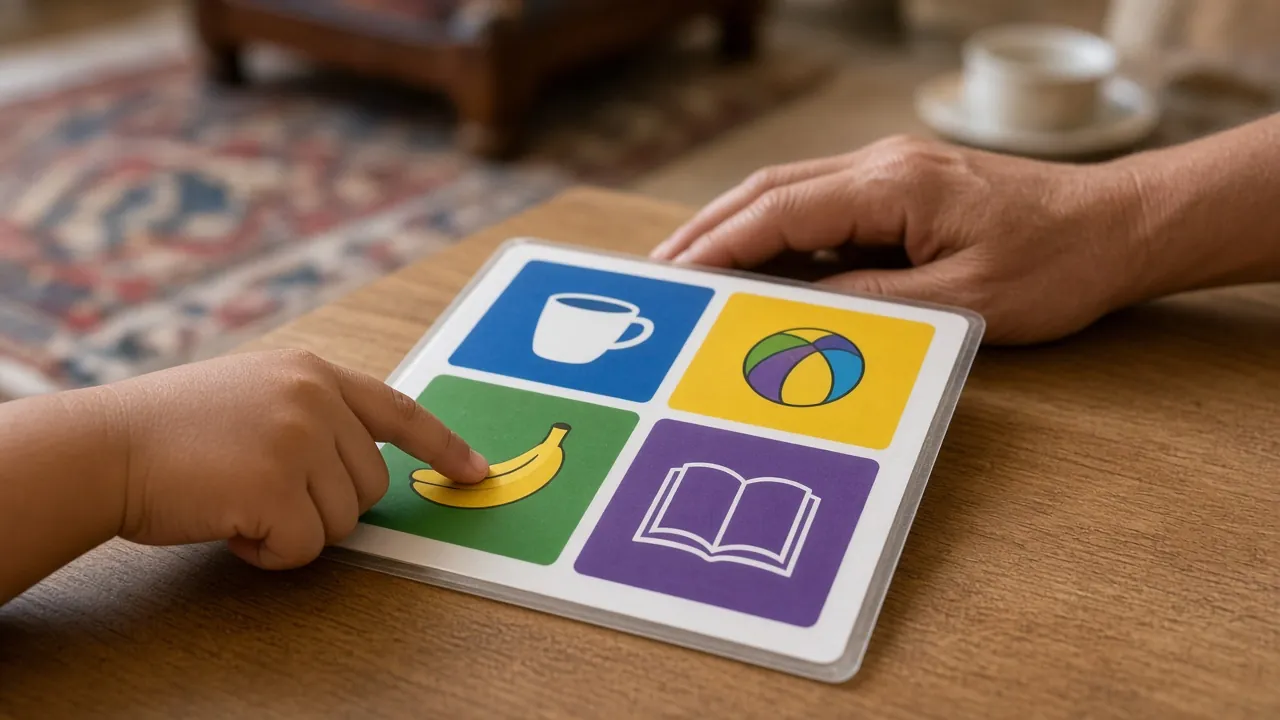
No. Research summarised by ASHA shows that AAC (augmentative and alternative communication), such as picture boards, signs and speech apps, does not stop children from developing speech and can support it. AAC gives a child a way to be understood now, which often reduces frustration.
Many parents and grandparents worry about this. ASHA’s guidance on AAC in early intervention says there is no “too young” for AAC, and that it should be introduced as soon as a child shows difficulty with spoken communication. A few points help:
- AAC can be very simple: a few photos on the fridge, a hand sign for “more,” or a printed choice board.
- Adults keep talking while they point to the pictures. The child hears the word every time.
- A speech app used to talk is not the same as screen time. The child is using it to communicate, not to watch.
Is repeating cartoon lines (echolalia) a bad sign?
Not necessarily. Many autistic children repeat lines from cartoons, adverts or adults, and these lines often carry meaning: a request, a protest, a comment or a way to calm down. Therapists now build on echolalia rather than trying to stop it.
Some children learn language in “chunks” first and break them into single words later. This is sometimes called gestalt language processing. An ASHA Leader article on echolalia gives the example of a child hearing “come sit down at the table” and using the whole phrase to mean “table.”
At home it might look like this. Your son says “Bye bye, see you tomorrow!” in his favourite cartoon voice every time he wants to leave a room. He isn’t being random. He is telling you “I want to go.” A therapist helps you spot these meanings, respond to them, and slowly model shorter, more flexible phrases like “go out” or “all done.”
What can parents do at home between sessions?
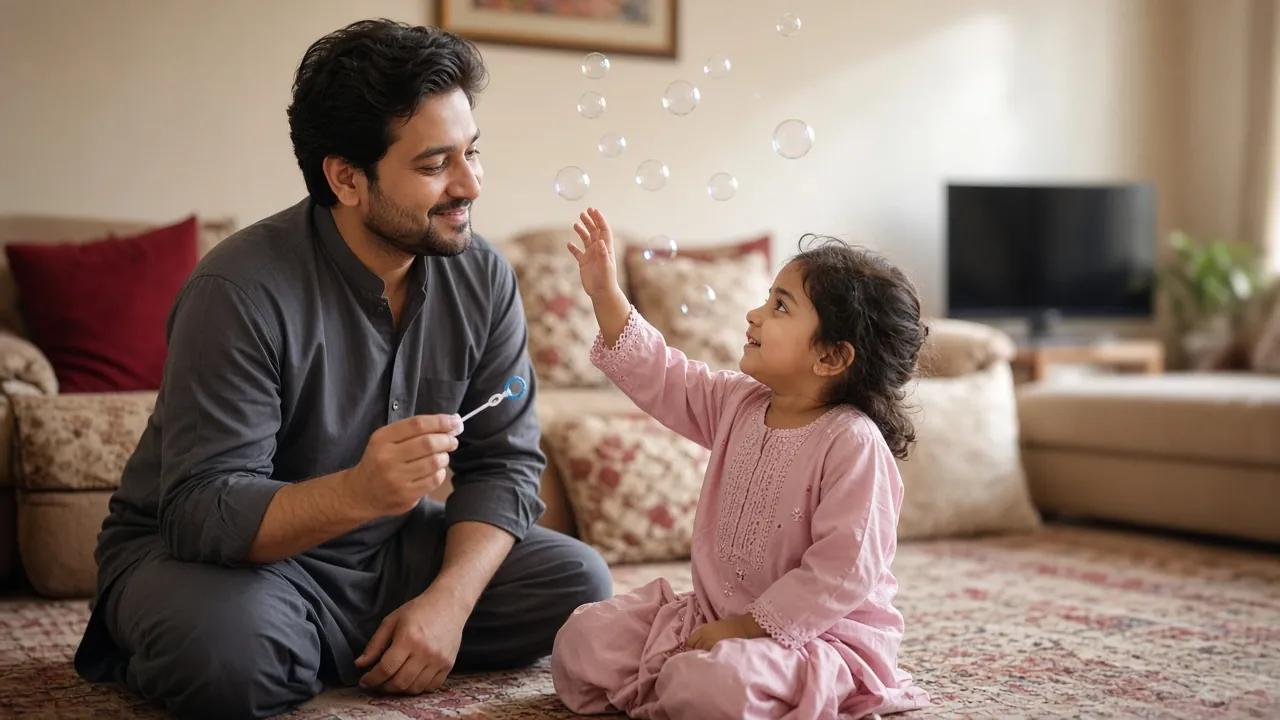
Get down to your child’s level, join what they are already doing, talk less but say it more clearly, and leave pauses so they have a reason and a moment to communicate. Small, playful moments spread through the day help more than one long practice session.
Ideas that fit easily into family life:
- The bubble pause. Blow bubbles, then stop and wait with the wand ready. Any look, sound, sign or word is your child asking for more. Respond straight away.
- Offer two choices. “Apple or biscuit?” while holding both up. It is easier than an open question and teaches that communication gets results.
- Comment instead of quizzing. Swap “What colour is this?” for “Red car. Fast!” Fewer questions means less pressure.
- Same words, whole family. In a joint family, agree on the same few words or signs for “more,” “finished” and “help” so the child hears one clear message from everyone.
- Use your home language. Speak to your child in the language you are most comfortable with, whether that is Urdu, Punjabi, Pashto or English.
You don’t need to force eye contact. Many autistic children listen better when they are not made to look at a face. Being close, at their level, and interested in what they like usually does more.

How do you choose in-home autism therapy you can trust?
Choose a qualified speech therapist who starts with an assessment, explains goals in plain words, involves the family, respects your child’s way of communicating, and reviews progress honestly. Walk away from anyone who promises a cure, a recovery date, or a child who will be “normal” after a set number of sessions.
Questions worth asking before you book:
- Have you worked with autistic children of my child’s age?
- Will you start with an assessment and explain the goals, and how will you include us between sessions?
- How will we know if therapy is helping, and when will you review it?
Be cautious about special diets, supplements or programmes sold as a cure. As the NHS explains, autism is not an illness and there is no cure, but there are many ways to support an autistic child and family.
Autism speech therapy near me: home visits in Islamabad and Rawalpindi
IRHC speech therapists visit homes in almost all areas of Islamabad and Rawalpindi, Monday to Sunday, 9 am to 9 pm, and online video sessions are also available. Share your child’s age, your main concern and your area when you contact us. Every booking is confirmed on WhatsApp.
For many families, “near me” really means “someone who can come to us.” Home visits skip the travel and waiting many autistic children find hard. If you prefer a clinic, partner clinic appointments in G-8 Markaz, Islamabad and Saddar, Rawalpindi are available when booked ahead.
To book, call 051-8776556 (9 am to 6 pm), WhatsApp 0300-6844361 (answered 24/7), or use the online appointment form. For fees, session length and payment, see our FAQs. You can also read more about our speech therapy services, our guide to speech therapy for adults, or our guide on speech therapy after a stroke.
Worried about your child’s speech or communication?
IRHC arranges home and video speech therapy for children in Islamabad and Rawalpindi, Monday to Sunday. Our team confirms every booking. For fees, timings and payment methods, see our FAQs, or read more about our speech therapy services.
Book an appointment | WhatsApp 0300-6844361 | Call 051-8776556
Frequently Asked Questions
Quick answers to what parents ask most before booking autism speech therapy. For fees and payment, see our FAQs page.
Can speech therapy cure autism?
No. Autism is a lifelong difference in how the brain develops, not an illness, and there is no cure. Speech therapy does not aim to remove autism. It supports communication: understanding, asking for needs, sharing attention and play. Be careful of anyone who promises a cure or a fixed result.
What are the first signs of autism in speech and communication?
Common early signs include not responding to their name, few gestures such as waving or pointing, not showing you things they like, repeating phrases, and losing words they used before. One sign alone does not mean autism. A pattern of signs is a reason to see a doctor for an assessment.
At what age can autism speech therapy start?
Communication support can start as soon as there is a concern. The American Academy of Pediatrics recommends autism screening at 18 and 24 months, and early support helps many children. Older children and teenagers can benefit too.
Does my child need an autism diagnosis before starting speech therapy?
Not always. A diagnosis is made by a doctor or specialist team, often a developmental paediatrician, child psychiatrist or psychologist. A speech therapist can assess communication and start work on it while that process goes ahead, and can suggest a referral if one has not been made.
Is in-home autism therapy as good as therapy at a clinic?
It depends on the child. Home sessions work inside real routines like snack time and play, with family learning alongside, and some children are calmer without travel or waiting rooms. Others do well at a clinic. Ask the therapist what suits your child.
My child does not speak. Can speech therapy still help?
Yes. Communication is more than spoken words. A speech therapist can work on understanding, gestures, signs, pictures or a speech app (AAC), along with spoken language where possible. Research summarised by ASHA shows AAC does not stop children from learning to talk.
How do I book autism speech therapy at home in Islamabad or Rawalpindi?
Call 051-8776556, WhatsApp 0300-6844361 (answered 24/7) or use the online appointment form. Tell us your child’s age, your main concern and your area. We visit homes in almost all areas of both cities, Monday to Sunday, and video sessions are available. For fees and session length, see our FAQs page.
Sources
- Centers for Disease Control and Prevention (CDC), Signs and Symptoms of Autism Spectrum Disorder
- American Academy of Pediatrics (HealthyChildren.org), Early Signs of Autism in Children
- NHS, Signs of autism in children
- NHS, What is autism?
- American Speech-Language-Hearing Association (ASHA), Autism Spectrum Disorder (Practice Portal)
- ASHA, Augmentative and Alternative Communication in Early Intervention
- The ASHA Leader, Echoes of Language Development: 7 Facts About Echolalia
Medical disclaimer: This article is for general information only and does not replace assessment by a doctor or a qualified speech and language therapist. Autism can only be diagnosed by an appropriate clinician or team after a proper assessment.