
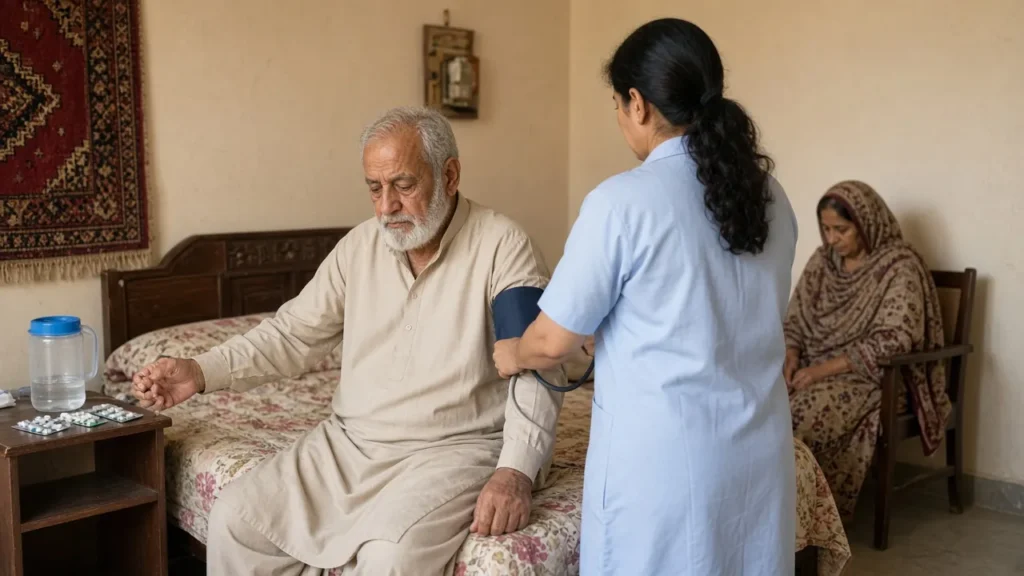
Short answer: Home nursing after hospital discharge means a nurse comes to the patient’s home to carry out the doctor’s plan: injections, wound and tube care, vital signs and safe daily care. It makes sense when the patient needs nursing tasks, cannot move alone, or the family cannot manage safely. It follows the discharge plan and never replaces the doctor. Families in Islamabad and Rawalpindi can arrange it at home with IRHC.
This guide is general information for families. It is not medical advice and does not replace the hospital’s discharge plan or your doctor’s instructions. If you are worried about a patient, speak to the treating doctor.
For chest pain, breathing difficulty, heavy bleeding, sudden weakness or loss of consciousness, call emergency services (1122) or go to a hospital first.
Listen to a short overview
51 seconds · a spoken conclusion of this guide. It does not replace your doctor’s advice.
Key takeaways
- Before you leave hospital, get the discharge letter, a written medicine list, wound instructions, follow-up dates and a number to call.
- A nurse is worth arranging when there are injections, wounds, tubes or lines, or when the patient cannot move alone.
- Set up a safe bed, bathroom and walking path before the patient arrives. Many falls can be prevented.
- A worse wound, a swollen leg, confusion or very little urine means call the doctor promptly. Chest pain or trouble breathing means emergency services.
- IRHC arranges home nursing in almost all areas of Islamabad and Rawalpindi, Monday to Sunday.
In this guide
The hospital stay ends, and the family is suddenly on its own with a bag of medicines, a stack of papers and a long list of “watch for this.” This guide to home care after hospital discharge covers the first days and weeks: what to ask, what to prepare, what to watch for, and when a nurse helps.
When does home nursing after hospital discharge make sense?
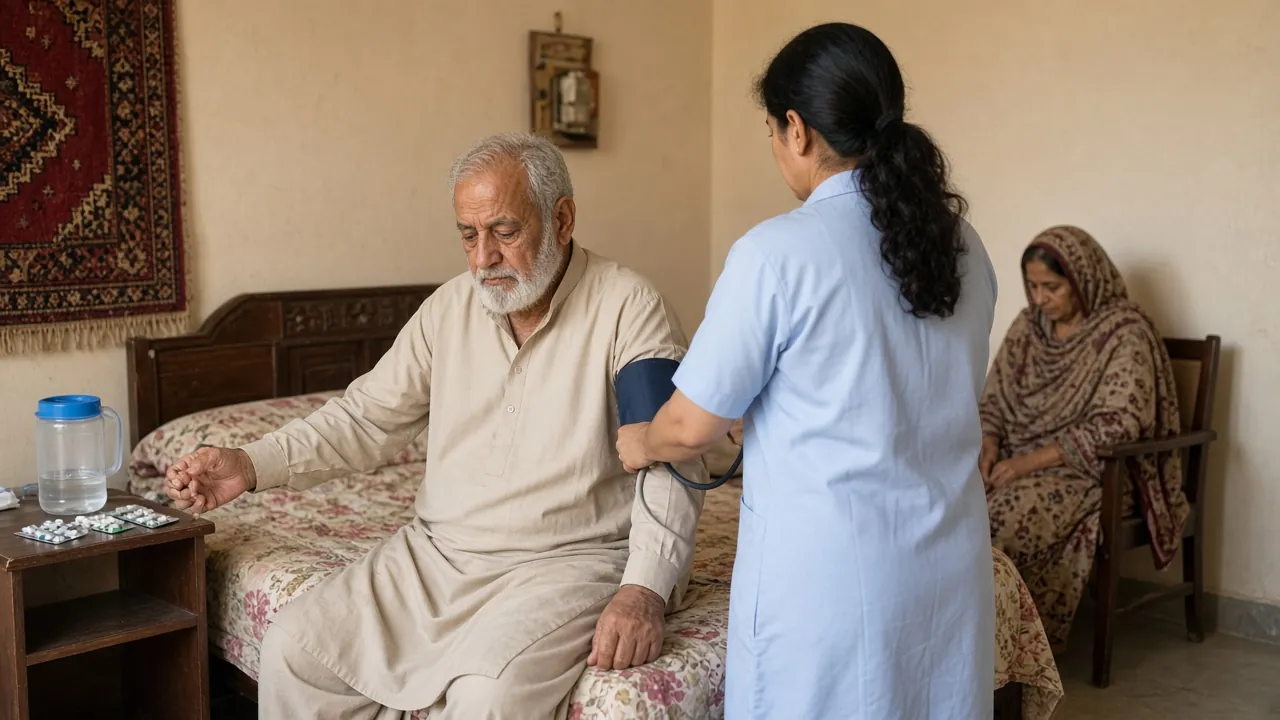
Home nursing makes sense when the patient still needs nursing tasks that the family cannot safely do, such as injections, wound dressings, tube or line care, or when the patient cannot move or look after themselves. It can also help when the family is worn out, or the patient is elderly and lives with long-term illness.
Common situations after discharge:
- After an operation or injury: wounds to dress, medicines to give on time, and a person who needs help moving safely.
- Tubes and lines: a urinary catheter, an NG (feeding) tube or an IV line that need regular care.
- Bedbound or very weak patients: help with washing, dressing, toilet and changing position in bed, which is hard to do alone.
- Older adults: several medicines, poor balance, and a higher risk of falls and dehydration.
- Long nights: when someone must stay awake and the family cannot manage another night. A 12-hour or 24-hour shift can cover this.
If the patient is stable and mostly needs company and light help, the family may manage with the doctor’s advice. If you are unsure, ask the discharging doctor before you leave. For exercise after surgery, an injury or a stroke, a physiotherapist can visit too.
What should you get from the hospital before going home?
Ask for the discharge letter, a written list of medicines with doses and timings, wound and equipment instructions, follow-up dates, and a phone number to call with problems. Do not leave until you can say, in your own words, what the plan is.
The AHRQ’s guide for leaving hospital and the NHS discharge guidance agree on the basics. Use this checklist:
- The diagnosis and what was done, in plain words.
- Every medicine: name, dose, time, what it is for, and what changed. Ask which old medicines to stop. The WHO report on medication safety at transitions of care says an up-to-date medicine list should go to the patient and family.
- Wound, tube and equipment care: ask someone to show you, not just tell you. NHS advice after surgery suggests asking how to care for the wound and who to call.
- What to avoid, what the patient can do alone, and any diet or fluid limits.
- Follow-up dates and tests, and one phone number for the ward or doctor, including at night.
Write the medicine times on one sheet and keep it with the papers. Share the same papers with the nurse.

What can a home nurse do, and what can they not do?
A home nurse carries out nursing tasks as the patient’s doctor has prescribed: injections, IV and cannula care, catheter and NG tube care, wound care and vital-sign checks. A nurse does not diagnose, change treatment or replace the doctor, and in an emergency the patient needs a hospital.
At IRHC, our registered nursing staff work from the treating doctor’s advice. For bedbound patients, nursing also covers washing, dressing, eating, changing position and moving safely. Staying inside that scope protects the patient. Dose changes, new symptoms and test results go back to the doctor. For the difference between a nurse and a patient attendant, read our guide on what a home nurse does.
Which warning signs mean call the doctor, or call emergency?
Call the treating doctor promptly if a wound looks worse, there is a new fever, one leg swells, the patient is not drinking, or a tube leaks or blocks. Call emergency services or go to a hospital for chest pain, breathing difficulty, heavy bleeding, sudden weakness, confusion with slurred speech, or loss of consciousness.
Call the doctor promptly if you see:
- Wound changes: more redness, pain, swelling or bleeding, thick yellow or green drainage, a bad smell, a wound that opens, or a temperature of 38°C or higher (MedlinePlus).
- Pressure sores: patches of skin that stay red, purple or blue when pressed, or skin that feels warm, spongy or hard over the heels, hips, elbows or tailbone (NHS).
- Dehydration: dark urine, passing less than usual, dizziness or unusual tiredness (NHS).
- Catheter problems: leaking, blockage or fever. Infection is the main catheter risk (NHS).
- A fall, even if the patient seems fine (NHS).
Call emergency services (1122) or go to a hospital first if you see:
- Chest pain, difficulty breathing, heavy bleeding, sudden weakness or loss of consciousness. These are the emergency signs on the IRHC home nursing page.
- Pain and swelling in one leg together with shortness of breath or chest pain, which can mean a blood clot has reached the lungs (NHS).
- Confusion or slurred speech, uncontrollable shivering, very fast breathing, blotchy skin, or almost no urine all day. These can be signs of sepsis (NHS).
Trust your instincts. Older people and people who cannot speak well may show fewer signs. If you are really worried, do not wait until morning.
How do you prepare the home for someone coming back from hospital?
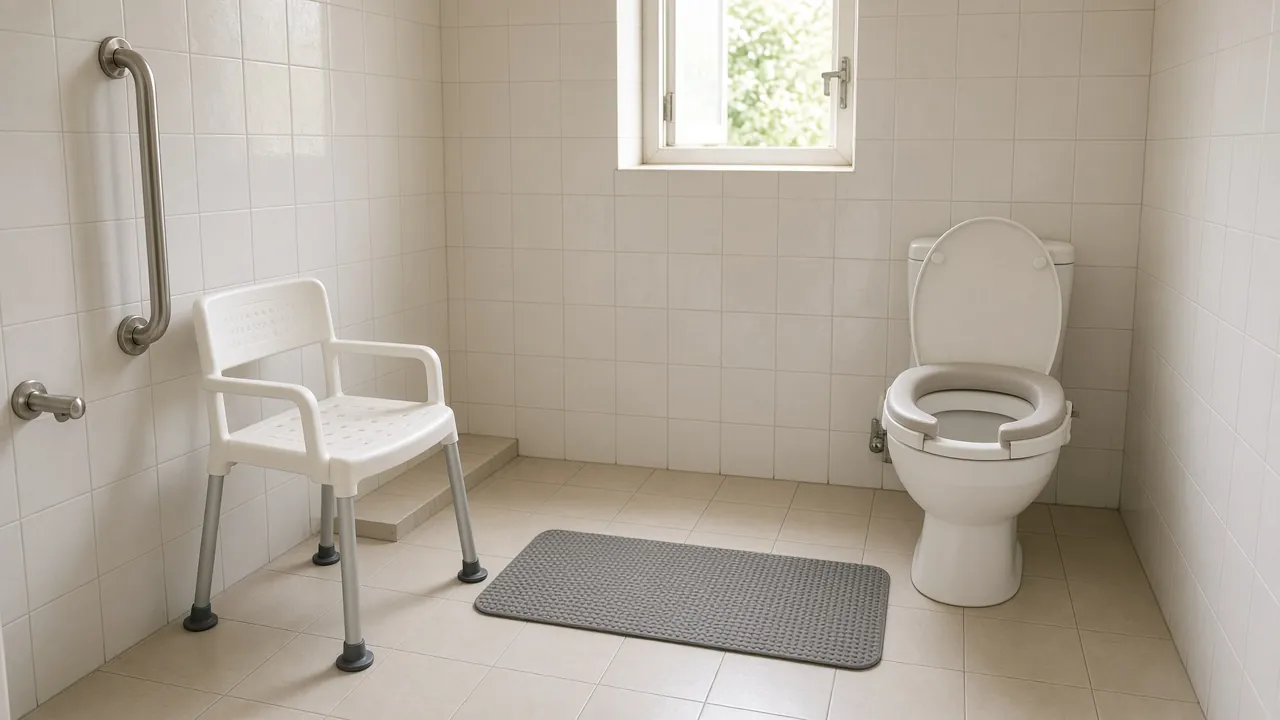
Put the bed and a toilet or commode on the same floor, clear the walking path, add a non-slip mat, a bath chair and grab bars in the bathroom, and keep water, medicines and a phone within reach. Do this before the patient arrives.
MedlinePlus’s guide to getting your home ready and the CDC’s fall prevention advice give a clear list. In a typical Islamabad or Rawalpindi home, it looks like this:
- Bedroom: if the bedroom is upstairs, move the bed to the ground floor. Keep a firm-backed chair nearby and a night light on.
- Floors: remove loose rugs and cords, fix uneven thresholds and keep walkways clear and well lit.
- Bathroom: a non-slip mat, a shower chair with rubber feet, and grab bars fixed to the wall. A towel rail is not a grab bar. Ask the doctor or physiotherapist about a commode chair or raised seat if getting down or up is hard.
- Within reach: water, medicines, a phone and a bell to call for help.
What should you have ready for the first nursing visit?
Keep the discharge papers, prescriptions and any doctor’s notes ready, and write down the medicine times and your main worries. The nurse then agrees a care plan with the family, which is reviewed as the patient’s needs change.
A short list helps:
- The discharge letter, prescriptions and the medicines themselves.
- Any wound, tube or equipment instructions from the hospital.
- Your questions, written down, so none are forgotten.
- The main family contact and the doctor’s phone number.
Our nursing staff can show family members how to help safely between visits, so ask for a demonstration of anything you will do yourself.
Who does what in the first weeks at home?
Families handle comfort, reminders, food, fluids and safe movement. A nurse handles prescribed nursing tasks. The doctor makes every decision about treatment and is the person to call when something changes.
| What needs doing | What the family can usually do | When a nurse or doctor steps in |
|---|---|---|
| Giving medicines on time | Use a pill organiser and a written schedule. Follow the doctor’s list exactly and ask the pharmacist if anything is unclear. | A nurse gives prescribed injections. Tell the doctor about missed doses or trouble swallowing tablets. |
| Wound dressing | Keep the area clean and dry as instructed. Wash hands first. No creams or home remedies unless the doctor says so. | A nurse can clean and dress it as the doctor advises. Call the doctor for more redness, swelling, pus or fever. |
| Catheter, NG tube or IV line | Keep it secure and never pull on it. Follow the steps you were taught before discharge. | A nurse looks after these as prescribed. Call the doctor for leaks, blockage or fever. |
| Washing, dressing, toilet, turning in bed | Family can help, using a shower chair and grab bars. Do not lift the patient alone. | A nurse can provide this care when the person is bedbound or cannot move alone, and show you safe ways to help. |
| Eating and drinking | Offer small meals and regular sips, following the hospital’s diet advice. Watch how much urine is passed. | Call the doctor if the patient is not drinking, is dizzy, or is passing very little dark urine. |
| Walking and exercises | Walk with support as advised, on a clear, well-lit path. | A physiotherapist plans exercises after an operation, injury or stroke. Tell the doctor about any fall. |
This is a general guide. If your discharge plan says something different, follow the plan and ask the doctor.
How can families help between nursing visits?
Keep one written schedule for medicines and appointments, keep a short daily log, wash hands before touching a wound or tube, help the patient move with support, and look after yourself too. Small routines make home recovery safer and less tiring.
- One sheet for everything: medicines, times, follow-up dates and key phone numbers, as the AHRQ guide suggests. Show it to every helper.
- A simple daily log: temperature, food and fluids, urine, pain, sleep and anything unusual. Short notes help the doctor and nurse.
- Clean hands: wash with soap for at least 15 to 30 seconds before touching a dressing or tube (MedlinePlus).
- Move early, move safely: the NHS notes that lying in bed too long raises blood clot risk, so short, supported walks and leg movements help if the doctor agrees. Do not lift a patient alone. After a fall, get help rather than lifting them yourself.
- Share the nights and rest: agree who stays near the patient so one person is not awake every night. A worn-out carer makes mistakes.
If the patient also had a stroke, our guide to speech therapy after a stroke at home covers speech and swallowing.
What should you ask before choosing a home nursing provider?
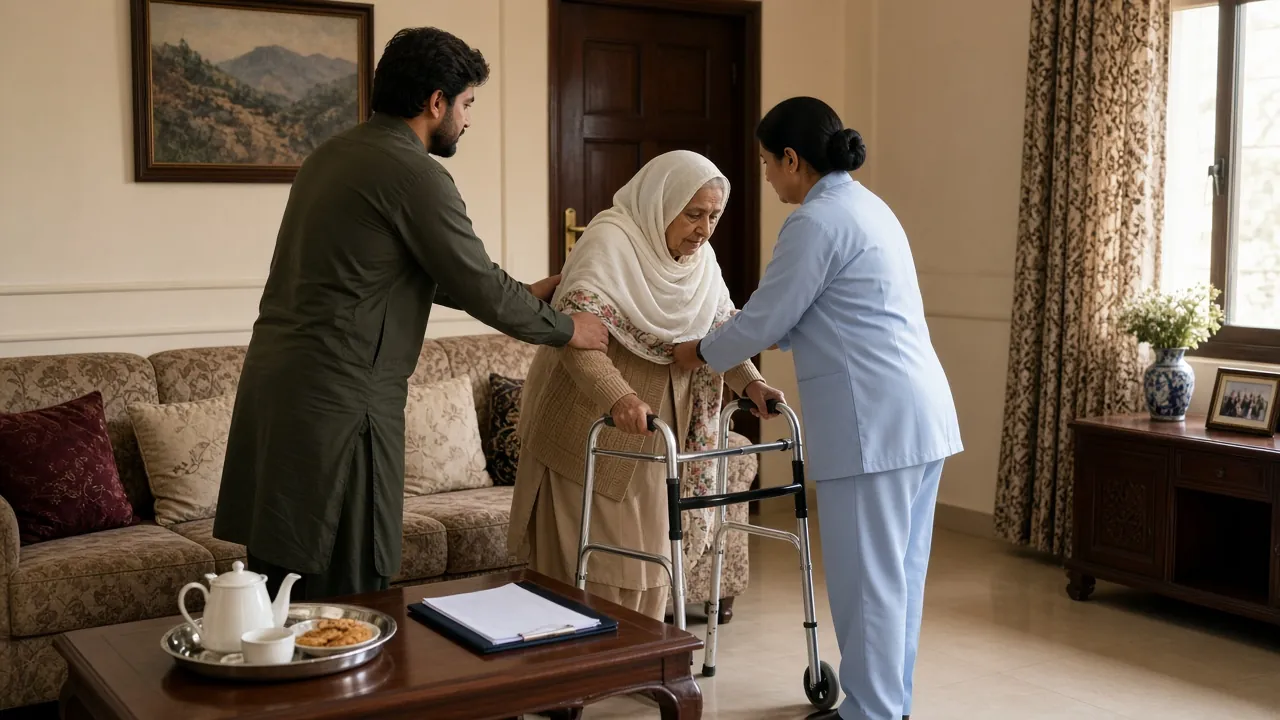
Ask who will come, what they are allowed to do, how the plan follows the doctor’s instructions, how you will be told about changes, and what happens if the nurse cannot come. Clear answers before the first visit are a good sign.
- Will you read the discharge papers and work from the doctor’s advice?
- Are your nursing staff registered? Can a female patient have a female nurse?
- Can the nurse show us how to help safely between visits?
- Which days and hours are covered, including nights? Who do we call if the nurse cannot come?
- How is the care plan agreed and reviewed, and how is the fee decided?
Be careful with anyone who promises recovery in a set time, offers to change medicines, or avoids a plain answer. For how registration works, see our guide on what a home nurse does.
Home nursing in Islamabad and Rawalpindi: how IRHC arranges it
IRHC provides home nursing in almost all areas of Islamabad and Rawalpindi, Monday to Sunday, by the hour, by 12-hour or 24-hour shift, or monthly. Our registered nursing staff work from the treating doctor’s advice. Every booking is confirmed on WhatsApp.
If you are looking for home nursing services in Islamabad, a nurse at home, or home nursing in Rawalpindi, our home nursing service covers:
- Nursing tasks: injections, IV and cannula care, urinary catheter and NG tube care, and vital signs checks, as prescribed.
- Patient care: washing, dressing, eating, changing position and moving safely for bedbound patients or those who cannot move alone.
- Types of care: post-operative care, wound care, elderly care, palliative care and help with daily living.
- Female nurses are available for female patients on request.
- Other options: a nursing consultation by online video, or a visit to our partner clinics in G-8 Markaz, Islamabad and Saddar, Rawalpindi (book ahead).
To book, call 051-8776556 (9 am to 6 pm), WhatsApp 0300-6844361 (answered 24/7) or use the online appointment form. Tell us the patient’s age and condition, what the doctor advised, the care needed, your area and the days you need us. Not sure we cover your area? Send your location on WhatsApp and we will confirm before booking. For fees and payment, see our FAQs. If exercise is also needed, ask about home physiotherapy.
Need a nurse at home after a hospital stay?
IRHC arranges home nursing in Islamabad and Rawalpindi, Monday to Sunday. Our team confirms every booking on WhatsApp. For fees, timings and payment methods, see our FAQs, or read more about our home nursing service.
Book an appointment | WhatsApp 0300-6844361 | Call 051-8776556
Frequently Asked Questions
Quick answers to what families ask most before booking home nursing after a hospital stay. For fees and payment, see our FAQs page.
How soon after discharge should home nursing start?
Ideally the first visit is planned before you leave hospital, so care is ready when the patient arrives home. Ask the ward team what care is needed, then contact us. Tell us the patient’s age and condition, what the doctor advised, the care needed, your area and the days you need us, and keep the discharge papers and prescriptions ready.
What nursing tasks can be done at home after discharge?
Our registered nursing staff give injections, look after IV lines, cannulas, urinary catheters and NG tubes, and monitor vital signs such as blood pressure, pulse and temperature. They also do wound care and post-operative care, and help bedbound patients with washing, dressing, eating and moving. Every task follows the patient’s doctor and prescription.
Is there a fixed price for home nursing in Islamabad and Rawalpindi?
No. Home nursing fees depend on distance and the time needed, so we give you a quote when you call or WhatsApp us with your area and the care needed. Payment is made in advance once the appointment is confirmed, by Easy Paisa, JazzCash, U Paisa, Raast ID, bank transfer or cash.
Can I book a nurse for a few days, overnight or for a month?
Yes. Nursing can be booked by the hour, by 12-hour or 24-hour shift, or monthly. A 24-hour shift covers day and night. Short-term care suits the days or weeks after a hospital stay, and monthly booking suits longer needs. The timing is agreed with you when you book.
Can a female patient ask for a female nurse?
Yes. Female nurses are available for female patients on request. Please mention it when you book.
Does my family member need a nurse, or can we manage ourselves?
It depends on the care needed. If there is a wound to dress, a tube or line, injections, or the patient cannot move alone, a nurse is usually the safer choice. If the patient is stable and mainly needs company and help with daily tasks, family can often manage with the doctor’s advice. Ask the discharging doctor.
How do I book home nursing in Islamabad or Rawalpindi?
Call 051-8776556 (9 am to 6 pm), WhatsApp 0300-6844361 (answered 24/7), or use the online appointment form. We visit almost all areas of both cities, Monday to Sunday. Not sure about your area? Send your location on WhatsApp and we will confirm before booking. Every booking is confirmed on WhatsApp.
Sources
- Agency for Healthcare Research and Quality (AHRQ), Taking Care of Myself: A Guide for When I Leave the Hospital
- NHS, Being discharged from hospital
- NHS, Having an operation: after surgery
- World Health Organization (WHO), Medication Safety in Transitions of Care (technical report)
- MedlinePlus, Getting your home ready after the hospital
- MedlinePlus, Surgical wound care, open
- CDC, Preventing Falls and Hip Fractures
- NHS, Pressure ulcers (pressure sores)
- NHS, DVT (deep vein thrombosis)
- NHS, Sepsis
- NHS, Dehydration
- NHS, Falls
- NHS, Urinary catheters
- Punjab Emergency Service (Rescue 1122), Emergency Ambulance Service
Medical disclaimer: This article is for general information only and does not replace the hospital’s discharge plan or the advice of the patient’s doctor. Nursing care at home follows the treating doctor’s instructions. In an emergency, call emergency services or go to a hospital.