Short answer: After a stroke, a speech therapist helps with speaking, understanding language, reading, writing and safe swallowing. Therapy can continue at home in Islamabad and Rawalpindi once the person is medically stable. This guide is the stroke-specific follow-on to our overview of speech therapy for adults.
This guide is general information for families. It is not a diagnosis or medical advice. If you are worried about your own or a family member’s health, speak to a qualified clinician.
Sudden face drooping, arm weakness, speech difficulty, balance loss or vision change can be signs of a stroke (B.E. F.A.S.T.). Call emergency services (1122 in Pakistan) or go to the nearest hospital straight away. Do not wait to see if it passes.
Key takeaways
- A speech therapist for stroke patients works on language (aphasia), speech clarity (dysarthria / apraxia of speech) and swallowing (dysphagia), after an assessment.
- Speech and language therapy is recommended after stroke; starting once the person is medically able to take part supports recovery. Swallowing must be checked before food or drink is changed.
- Home sessions suit people who find travel tiring after a stroke. IRHC provides speech therapy at home in almost all areas of Islamabad and Rawalpindi, Monday to Sunday, and by video call.
- Families help a lot: quiet rooms, patience, short practice between sessions, and never changing diet thickness without clinical advice.
- Fees, session length and payment methods are on our FAQs page — not repeated here.
In this guide
A stroke can change how someone talks, understands a conversation, or swallows a sip of water. Families in Islamabad and Rawalpindi often search for a speech therapist for stroke patients once hospital discharge is near, or weeks later when progress at home has stalled. Our adults overview covers the wider picture. This post focuses only on post-stroke speech, language and swallowing, and on how home therapy works.
Why does speech therapy matter after a stroke?
A stroke can damage the parts of the brain that handle language, the muscles used for speech, or the timing of a swallow. Speech therapy helps rebuild those skills and teaches safer ways to communicate and eat. It does not change intelligence — it targets communication and swallowing.
Guidelines from groups such as the American Heart Association / American Stroke Association and clinical summaries hosted by ASHA recommend speech and language therapy for people with aphasia after stroke, and early dysphagia screening before oral intake. The NHS also lists speech and swallowing exercises among common parts of a home recovery plan.
Progress varies. Some people improve quickly in the first weeks; others need months of steady practice. Therapy goals are personal: saying a family member’s name again, following a short instruction, or drinking water without coughing.
Aphasia, dysarthria and dysphagia: what is the difference?
Aphasia is a language problem (finding words, understanding, reading or writing). Dysarthria is unclear speech from weak or poorly coordinated speech muscles. Dysphagia is difficulty swallowing food, drink or saliva. A person can have one, two or all three after a stroke.
These terms get mixed up in everyday talk. The table below keeps them separate.
| Condition | What it is | Common signs | What therapy often works on |
|---|---|---|---|
| Aphasia | Language disorder from brain injury (often left-side stroke). Intelligence is intact. | Trouble finding words; saying the wrong word; hard to follow conversation; reading or writing problems | Word finding, understanding, reading/writing practice; conversation strategies; family coaching; AAC (gestures, pictures, apps) when needed |
| Dysarthria | Unclear or slurred speech from weak or poorly controlled speech muscles | Slurred sounds; quiet or strained voice; speech that is hard to understand, especially when tired | Breath support, clear articulation, slower rate, louder speech strategies, pacing |
| Dysphagia | Difficulty swallowing food, drink or saliva safely | Coughing or choking on food/drink; wet/gurgly voice after swallows; food sticking; repeated chest infections; weight loss | Assessment first; safer textures/strategies only after clinical advice; swallow exercises when appropriate |
| Apraxia of speech | Difficulty planning the mouth movements for speech (not muscle weakness alone) | Effortful speech; inconsistent sound errors; trouble starting words | Repeated practice of speech targets, slower rate, cueing |
According to ASHA’s public guide on aphasia, aphasia can affect speaking, understanding, reading and writing, and it does not mean the person is less intelligent. NHS guidance on dysphagia lists coughing or choking when eating or drinking, food sticking, and a wet-sounding voice after swallows among warning signs that need checking.
When should speech therapy start after a stroke?
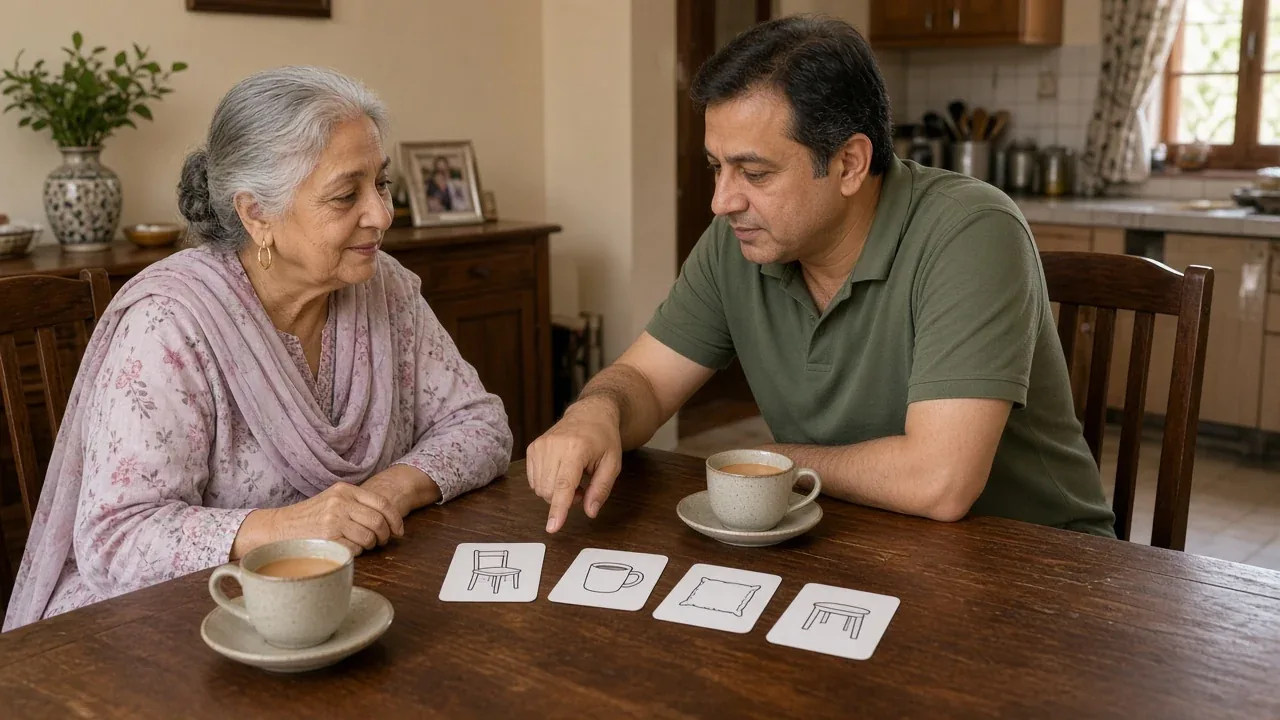
Speech therapy should start once the person is medically stable enough to take part. Hospitals often screen swallowing early, before food or drink by mouth. Language therapy in the first weeks after stroke can support recovery; therapy can still help months or years later if problems remain.
Clinical stroke guidelines summarised for clinicians (including material reviewed by ASHA) support offering aphasia therapy early — commonly discussed within the first four weeks when the person can participate — and continuing into later stages with intensity matched to stamina. Dysphagia screening is recommended early after stroke, before oral intake, because unsafe swallowing raises the risk of pneumonia.
In practice:
- In hospital: swallow screen and first therapy plan with the ward team.
- At discharge: ask for clear written advice on diet texture, thickened fluids (if any), and communication tips.
- At home: continue with a speech therapist who can visit, or by video if travel is hard.
- Later: if speech, understanding or swallowing is still limited, an assessment is still useful — recovery does not stop on a fixed calendar.
IRHC sees adults after stroke for home or video sessions. The first visit is an assessment; the plan and how many sessions may help are explained after that. Exact fees and session length are listed on our FAQs.
What does a speech therapist for stroke patients do at home?
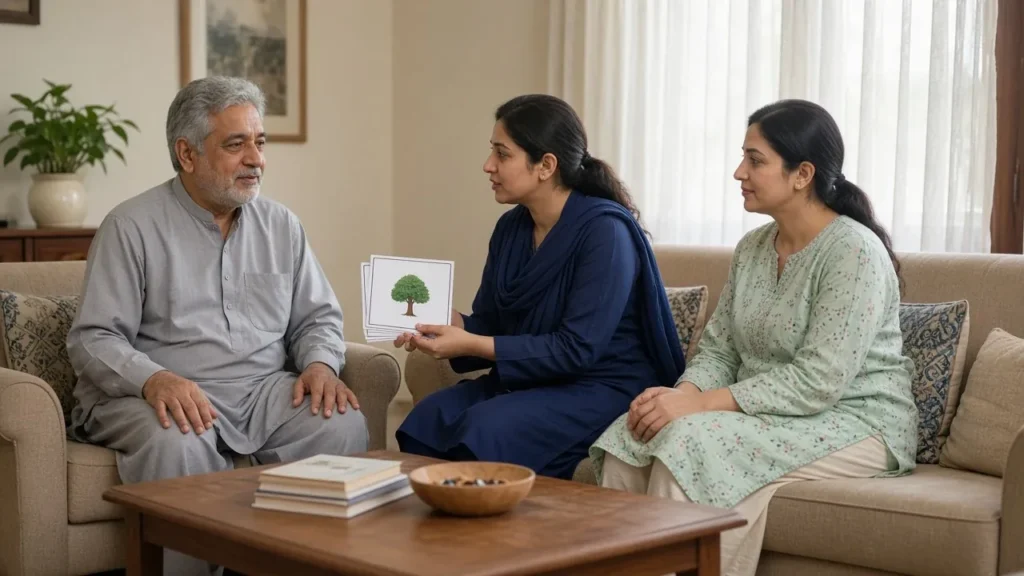
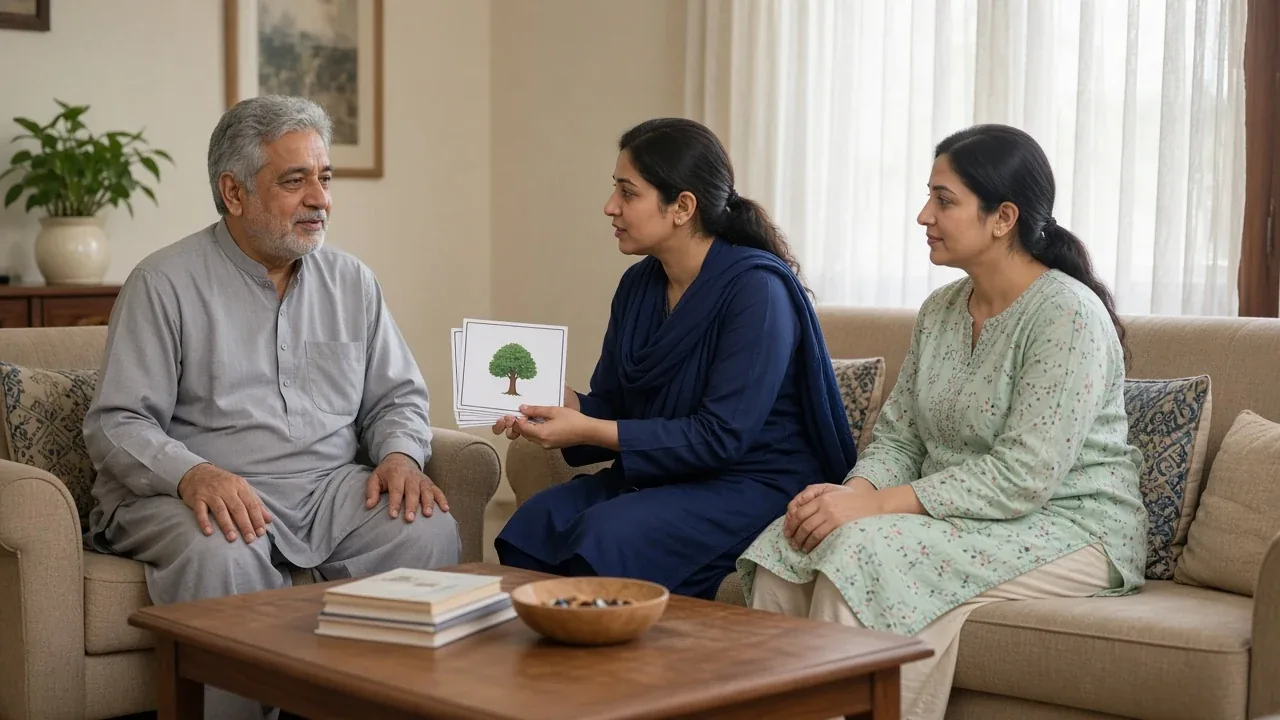
At home, the therapist assesses speech, language, voice and swallowing concerns that are safe to review outside hospital, then practises tasks that match real life: conversation, naming, reading labels, or swallow exercises the person has been cleared for. Family members can watch and learn how to help between visits.
A typical home path looks like this:
- History. When was the stroke? Which hospital advice was given? Any choking, tube feeding, or hearing loss?
- Assessment. Talking, understanding, reading, writing, speech clarity, and — when appropriate and within scope for a home visit — a clinical swallow screen or review of existing diet advice. Complex instrumental tests (such as videofluoroscopy or FEES) are hospital procedures, not home tests.
- Goals. Chosen with the person and family: for example, asking for water, using a phone, or safer mealtimes.
- Therapy activities. Word drills, sentence practice, conversation coaching, speech-muscle and clarity work, and swallowing practice only when cleared.
- Home programme. Short, realistic tasks for the days between sessions.
Home visits remove the fatigue of travel after a stroke. Video speech therapy is also available when a home visit is not practical — see our speech therapy service page.
Swallowing after a stroke: what should families know?
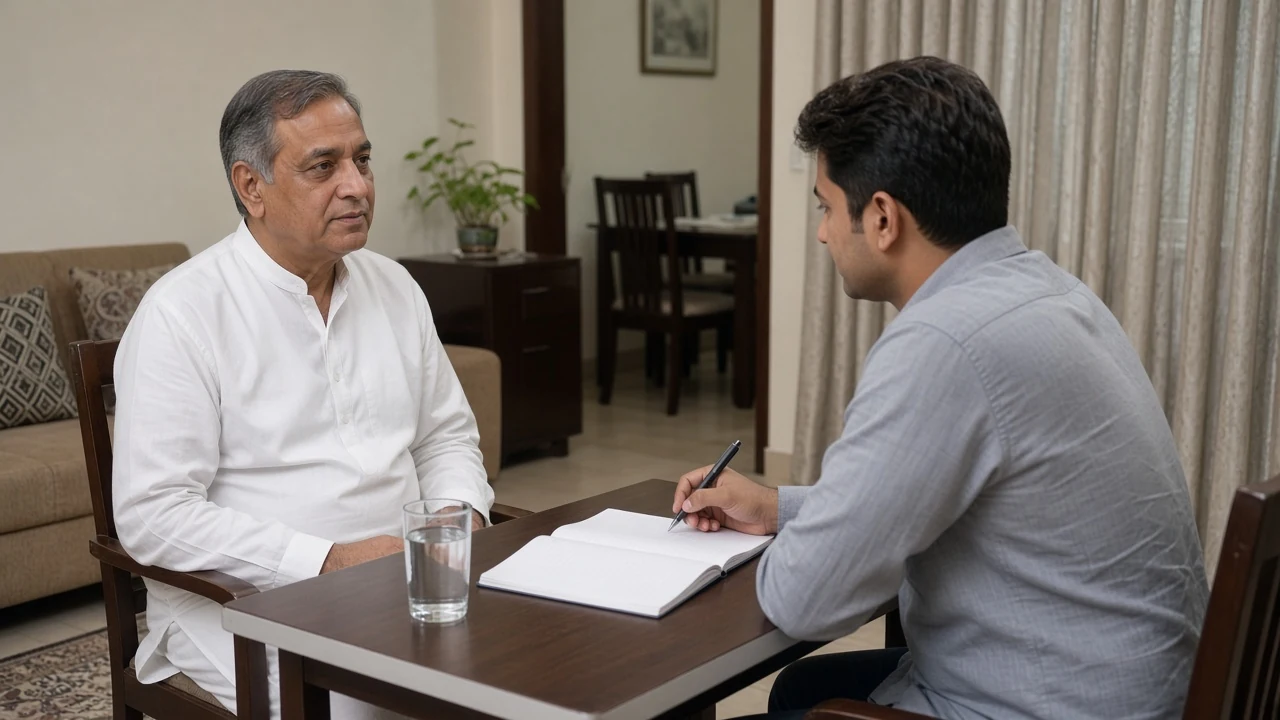
Do not change food or drink thickness on your own. Swallowing problems need a proper assessment. Coughing, choking, a wet voice after swallows, or chest infections after meals are reasons to get urgent clinical advice. Therapy then works on safer strategies and exercises suited to that person.
Unsafe swallowing can lead to food or liquid entering the airway (aspiration). That is why stroke teams screen swallowing before oral intake. At home:
- Follow the written diet and fluid advice from the hospital or the treating clinician.
- Sit upright for meals; avoid rushed eating; take small sips and bites if advised.
- Watch for new coughing, fever, or wet-sounding speech after drinks — report these.
- Mouth care matters; leftover food in the mouth raises infection risk.
A home speech therapist can reinforce safe strategies and practise exercises when appropriate. If the concern is severe or unclear, the therapist will say when a hospital instrumental assessment is needed. This post cannot and does not prescribe diet levels.
How can families help with practice at home?
Short, calm practice between sessions helps more than long, stressful drills. Speak slowly, use short sentences, give time to answer, reduce background noise, and use gestures or writing when speech is hard. Never force food or drink if swallowing is unsafe.
Useful habits (aligned with ASHA communication tips for aphasia):
- Get the person’s attention before you speak.
- Use a natural voice — not louder unless they ask — and short, clear sentences.
- Ask yes/no or choice questions (“tea or water?”) instead of open ones when talking is hard.
- Wait; try not to finish every sentence for them.
- Keep a quiet room: TV and fans off during practice.
- Practise for a few minutes several times a day rather than one long session when the person is tired.
- Celebrate small wins: one clearer word, one safe sip, one completed request.
If physiotherapy is also part of recovery (movement, balance, transfers), that is a separate service. IRHC can arrange both through one contact when needed; this guide stays on speech and swallowing.
How do you choose a speech therapist for a stroke patient?
Look for a qualified speech and language therapist experienced with adult neurological cases (aphasia, dysarthria, dysphagia), who starts with an assessment, sets clear goals, involves the family, and explains what is and is not safe to practise at home. Ask how progress will be reviewed.
Questions worth asking before you book:
- Have you worked with stroke, aphasia and swallowing before?
- Will the first session be an assessment with a written or clear verbal plan?
- Can sessions be at home in our area, or by video?
- How should we practise between visits — and what should we avoid?
- How do you work with the doctor or hospital advice we already have?
Avoid anyone who promises a fixed recovery date, skips assessment, or tells you to thicken fluids without evaluating swallow safety. IRHC’s speech therapists hold qualifications in their field; you can read about the team on the site’s Team page before booking. We do not list staff names inside this article.
Home speech therapy for stroke patients in Islamabad and Rawalpindi
IRHC arranges speech therapy at home for adults after stroke in almost all areas of Islamabad and Rawalpindi, Monday to Sunday, and also by video call. Share the person’s age, the main concern (speech, understanding or swallowing) and your area when you get in touch. Every booking is confirmed on WhatsApp.
After a stroke, leaving the house for clinic appointments can be hard. Home sessions take place where the person already rests, with family nearby to learn the practice. Partner clinic appointments in G-8 Markaz, Islamabad and Saddar, Rawalpindi are also available by booking ahead.
To book: call 051-8776556 (9 am to 6 pm), WhatsApp 0300-6844361 (answered 24/7), or use the online appointment form. Payment is made in advance by Easy Paisa, JazzCash, U Paisa, Raast ID, bank transfer or cash. For fees, session length and packages, see our FAQs.
For the wider adult picture (voice, stammering, general adult therapy), read Speech Therapy: Not Just for Kids — Unlocking Benefits for Adults. For the service itself, see speech therapy at home.
Need a speech therapist for a stroke patient at home?
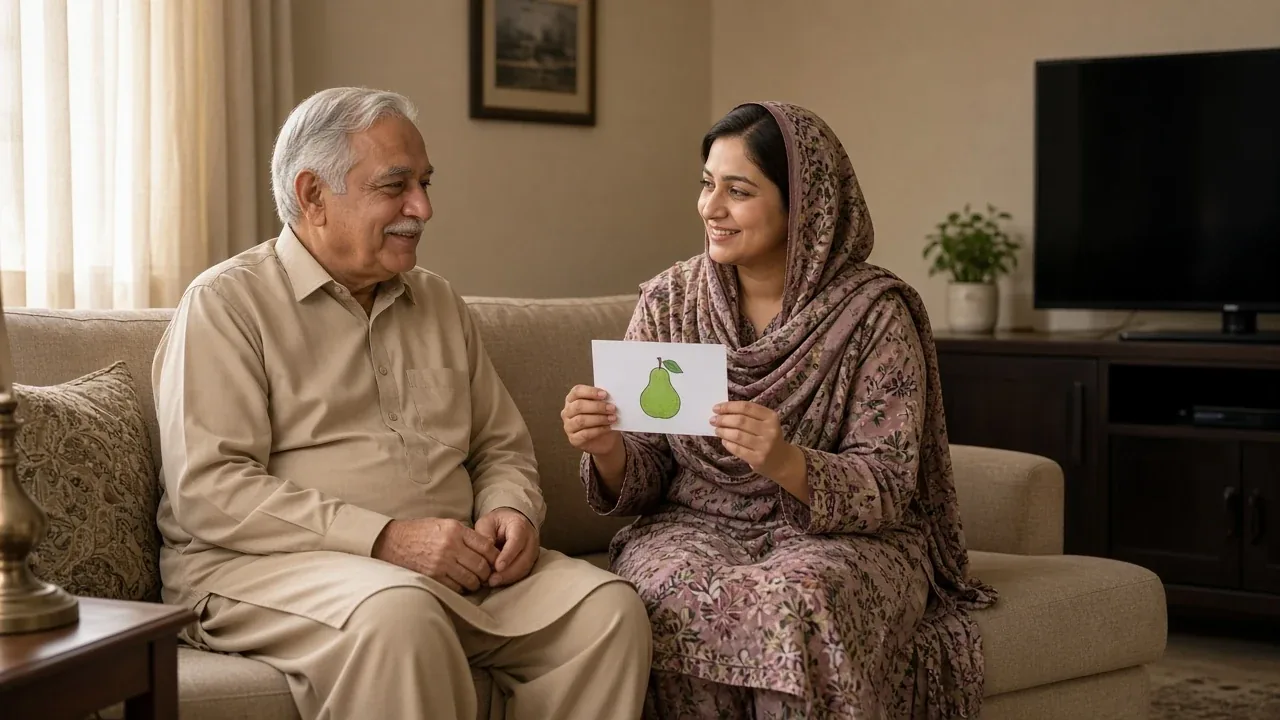
IRHC arranges home and video speech therapy for adults after stroke in Islamabad and Rawalpindi, Monday to Sunday. Our team confirms every booking. For fees, timings and payment methods, see our FAQs, or read more about our speech therapy services.
Book an appointment | WhatsApp 0300-6844361 | Call 051-8776556
Frequently Asked Questions
Quick answers to what families ask most before booking speech therapy after a stroke. For fees and payment, see our FAQs page.
Do stroke patients need a speech therapist?
Many do. A stroke can affect language (aphasia), speech clarity (dysarthria), planning of speech movements (apraxia of speech) and swallowing (dysphagia). A speech therapist assesses which areas are affected and sets a plan. Not every stroke causes speech problems, but new trouble speaking, understanding or swallowing should be checked.
When should speech therapy start after a stroke?
As soon as the person is medically stable enough to take part. Swallowing is often screened in hospital before oral intake. Language therapy in the early weeks can support recovery, and therapy can still help later if problems continue. Ask the discharge team what to continue at home.
What is the difference between aphasia and dysarthria?
Aphasia is a language problem: finding words, understanding, reading or writing. Dysarthria is unclear or slurred speech from weak or poorly coordinated speech muscles. Both can happen after a stroke, sometimes together. Therapy approaches differ, which is why assessment comes first.
Can swallowing therapy be done at home?
Some swallowing therapy and safer-eating advice can continue at home after a clinical assessment. Do not change diet thickness on your own. Instrumental tests such as videofluoroscopy or FEES are hospital procedures. A home therapist can reinforce strategies and exercises the person has been cleared for.
Is speech therapy after a stroke available at home in Islamabad and Rawalpindi?
Yes. IRHC provides speech therapy at home in almost all areas of both cities, Monday to Sunday, and by video call. Tell us the person’s age, the main concern and your area when you book. Every booking is confirmed on WhatsApp.
How do I book a speech therapist for a stroke patient?
Call 051-8776556, WhatsApp 0300-6844361 (answered 24/7) or use the online appointment form. Share that the concern is post-stroke speech, language or swallowing. For fees and payment methods, see our FAQs page.
Will speech fully return after a stroke?
Recovery varies. Some people regain a lot of speech and safe swallowing; others keep longer-term changes and learn new ways to communicate. Therapy aims for the best function possible for that person. No honest clinician can promise a fixed outcome or date.
Sources
- American Speech-Language-Hearing Association (ASHA), Aphasia (public guide)
- American Stroke Association, B.E. F.A.S.T. stroke warning signs
- NHS, Recovering from a stroke
- NHS, Dysphagia (swallowing problems)
- American Heart Association / American Stroke Association, Guidelines for Adult Stroke Rehabilitation and Recovery (speech-language and dysphagia recommendations summarised via ASHA Evidence Maps)
Medical disclaimer: This article is for general information only and does not replace assessment by a doctor or a qualified speech and language therapist. Swallowing advice must come from a clinician who has assessed the person. Seek emergency care for new stroke signs (B.E. F.A.S.T.).