
Short answer: Yes, earbuds can damage your hearing if you listen loud for long. Earbuds hearing loss is a type of noise-induced hearing loss, and it is permanent but preventable. Keep the volume at or below about 60% and take breaks. Get a hearing test if you have ringing that does not settle, muffled sound, or trouble following talk in noisy places. Sudden hearing loss in one ear needs a doctor the same day. Families in Islamabad and Rawalpindi can book a hearing test at home with IRHC.
This guide is general information. It is not medical advice and does not replace an examination by a doctor or an assessment by a qualified audiologist.
Listen to a short overview
49 seconds · a spoken conclusion of this guide. It does not replace your doctor’s advice.
Key takeaways
- Volume and time decide the risk, not the type of headphone. WHO says 80 dB is safe for up to 40 hours a week, and 90 dB for only 4.
- A simple habit: volume at or below about 60% and a break every hour.
- Ringing, muffled sound and trouble in noisy places are early warnings. Do not wait for them to become permanent.
- Sudden hearing loss, especially in one ear, is an emergency. See a doctor the same day.
- IRHC does hearing tests at home in almost all areas of Islamabad and Rawalpindi, Monday to Sunday.
In this guide
- Can earbuds damage your hearing?
- How loud is too loud?
- The 60/60 rule
- Earbuds, over-ear and noise-cancelling (table)
- Early signs of noise-induced hearing loss
- Temporary or permanent damage
- Who is most at risk
- Safe-listening features on your phone
- Ear hygiene and sharing earbuds
- Myths and facts
- Sudden hearing loss
- When to get a hearing test
- Children and headphones
- Hearing tests at home in Islamabad and Rawalpindi
- FAQs
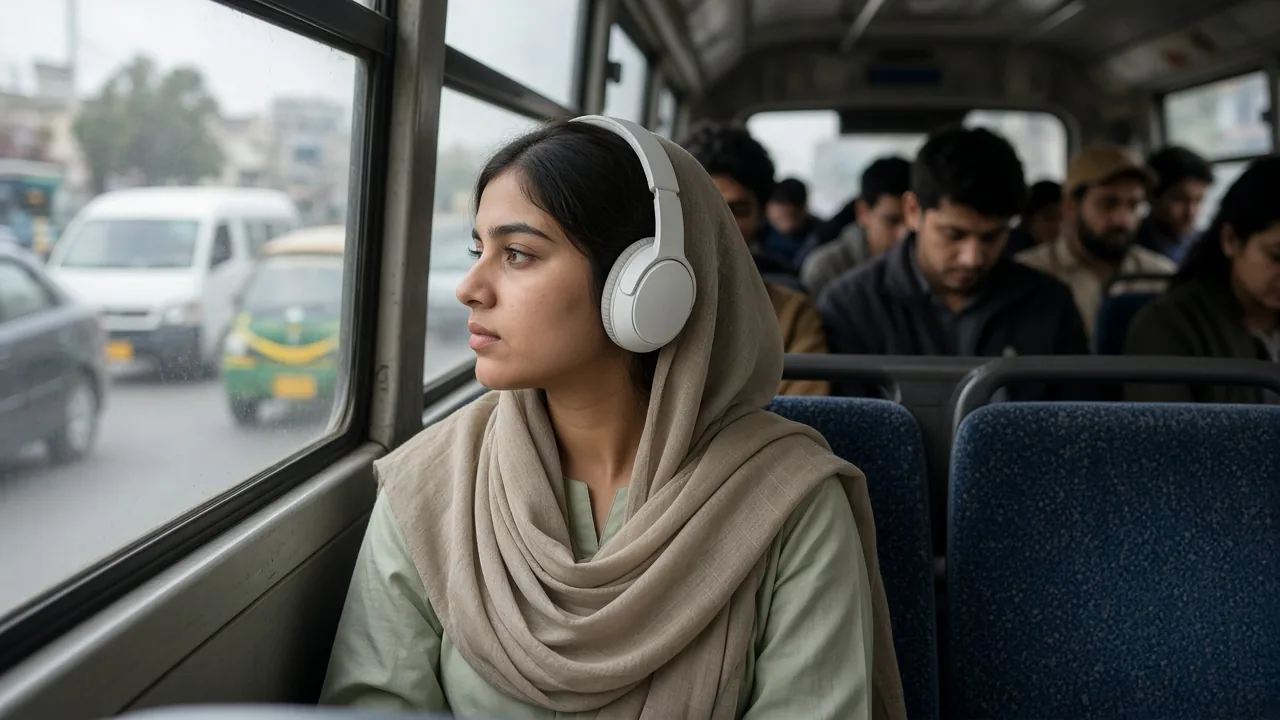
You are on the bus home, the traffic is loud, and your favourite playlist is on. You nudge the volume up a little. A few minutes later, a little more. Sound familiar? This guide explains how earbuds can harm hearing, what safe listening looks like, the early signs, and when to get tested.

Can earbuds damage your hearing?
Yes, if the volume is high and you listen for long periods. Earbuds are not harmful by themselves. Loud sound over time damages the tiny hair cells in the inner ear, and those cells do not grow back. That slow damage is what people mean by earbuds hearing loss.
Inside the inner ear, tiny hair cells turn sound into signals for the brain. Loud sound can tire and eventually kill them. The NIDCD explains that most noise-induced hearing loss comes from this damage, and that human hair cells do not regrow. The WHO estimates that more than 1 billion young people aged 12 to 35 are at risk from loud recreational sound. The good news: the NIDCD calls this the only type of hearing loss that is completely preventable.
How loud is too loud? Decibels and safe listening time
Sounds at or below about 70 dB are unlikely to harm hearing. Around 85 dB, long or repeated exposure can. The louder the sound, the less time it takes. WHO says 80 dB is safe for up to 40 hours a week, but 90 dB for only 4 hours.
Sound is measured in decibels (dB), and the scale climbs fast. WHO’s “Make Listening Safe” guidance gives these weekly limits and examples (WHO Q&A):
- 60 dB, normal conversation: no limit.
- 80 dB, about a doorbell: up to 40 hours a week.
- 85 dB, heavy traffic heard from inside a car: about 12 hours 30 minutes a week.
- 90 dB, a shouted conversation: 4 hours a week.
- 100 dB, a hair dryer: about 20 minutes a week.
The NIDCD lists music through headphones at maximum volume at about 94 to 110 dBA, well above these limits. You cannot read decibels off a volume bar, so use WHO’s simple test: if you have to raise your voice to be heard by someone at arm’s length, the sound is too loud.
What is the 60/60 rule, and does it work?
The 60/60 rule is a rule of thumb: keep the volume at or below about 60% and listen for no more than about 60 minutes before a break. WHO backs the 60% part. The 60-minute part is a popular habit, not an official limit.
WHO advises setting your device volume to no more than 60% of maximum, and it suggests resting your ears for around 10 minutes after each hour in loud settings or gaming. Treat 60/60 as a starting point, because the real level depends on your phone, headphones and what you play. If you need more than 60% to hear in a noisy place, the answer is a better fit or noise cancelling, not more volume.
Earbuds, over-ear headphones or noise-cancelling: which is safer for hearing?
No type is safe on its own, because volume and time matter most. Well-fitted noise-cancelling headphones can help, since they let you keep the volume lower in noisy places. WHO recommends them for that reason.
Models differ a lot, so treat the table as rough pointers, not a ranking.
| What you notice | In-ear earbuds | Over-ear headphones | Noise-cancelling (any style) |
|---|---|---|---|
| How it sits | In or at the opening of the ear canal, close to the eardrum. | Cups sit over or around the ear, a little further away. | Microphones cancel part of the steady outside noise. Comes as earbuds or over-ear. |
| Blocking background noise | Snug tips block a fair amount. Loose tips let traffic in. | Closed-back designs block some. Open-back ones let sound in and out. | Best on steady sounds like engines and fans. Less help with sudden noise or voices. |
| Urge to turn the volume up | Strong on buses and in traffic when noise leaks in. | Also common in noisy places, less with a good seal. | Lowest. A quieter background lets you keep the volume down. |
| Comfort and hygiene | Warm, damp ear canal. Tips collect wax. Do not share. | Less contact with the canal. Pads need wiping. | Same as the style you choose. |
| Watch out for | Long sessions at high volume, shared tips. | Gaming or calls for hours without a break. | Feeling safe and turning it up anyway. Quiet is not the same as safe. |
Noise cancelling helps, but it does not make a high volume safe. Use it to listen lower, not louder for longer.
What are the early signs of noise-induced hearing loss?
Common early signs are ringing in the ears (tinnitus), sound that seems muffled, trouble following speech in noisy places, and needing the TV or phone louder than others. Because it creeps up slowly and does not hurt, many people miss it.
WHO and the NIDCD list these signs:
- Persistent ringing or buzzing in one or both ears.
- Muffled or distorted sound, as if cotton wool is in your ears.
- Trouble with high-pitched sounds such as birdsong, doorbells, phones or alarms.
- Trouble following conversation in restaurants, markets or family gatherings, especially when several people talk.
- Turning up the TV or phone more than others would like, or finding speech on the phone hard to understand.
Family or friends often notice first. If you say “what?” more than you used to, take it seriously.
Is hearing damage from earbuds temporary or permanent?
Both can happen. After a loud event, you may have muffled hearing or ringing that fades in hours or days. Repeated loud exposure can cause permanent damage. Even when hearing seems to recover, some damage may remain.
WHO explains that loud sound tires the sensory cells, which can cause temporary hearing loss or tinnitus. This often improves as the cells recover. With regular loud or prolonged noise, the cells can be permanently damaged, causing irreversible hearing loss, tinnitus, or both. The NIDCD says temporary loss usually clears within 16 to 48 hours, but that research suggests there may be lasting damage even when hearing feels normal again. So “it went away” does not mean “no harm done.”
Who is most at risk from loud headphones and noise?
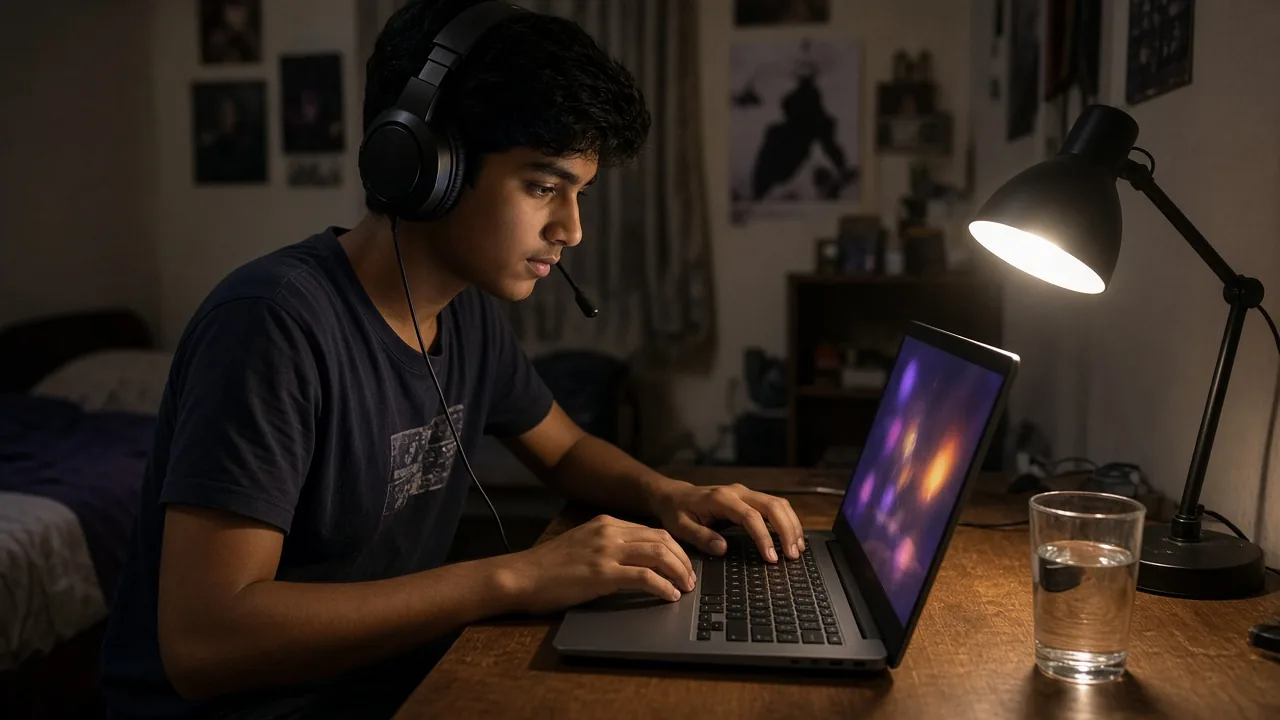
Anyone who listens loud for long, but especially teenagers and young adults, students, gamers, daily commuters and people who work in noisy places. Loud events add to the risk.
- Teens and students: long hours of music, videos and online classes through earbuds.
- Gamers: hours of sound in a headset, often with raised volume to hear footsteps or teammates. WHO has a safe-listening standard for gaming and advises a break every hour.
- Commuters: bus, metro and motorbike noise tempts you to turn up the volume. The NIDCD puts motorcycles at roughly 80 to 110 dBA.
- Workers in noise: factories, workshops, construction and generators. Earplugs or earmuffs matter here, and music on top adds more.
- Loud events: wedding functions with powerful speakers, concerts and fireworks. WHO lists firecrackers at about 150 dB. Stand away from speakers and wear earplugs.
Do the safe-listening features on your phone actually help?
Yes, they are worth switching on. Many phones now track how loud and how long you listen, warn you when you pass a weekly limit, and can lower loud audio. They are estimates, not a hearing test.
iPhone
On a recent iPhone, go to Settings, then Sounds & Haptics, then Headphone Safety. There you can turn on Headphone Notifications, and Reduce Loud Audio to lower anything above a level you choose. The Health app keeps your listening history under Hearing. Apple says the notification appears when you pass the 7-day limit, for example 80 dB for a total of 40 hours. It measures best with Apple or Beats headphones and estimates from the volume setting for other brands (Apple Support).
Android
Recent versions of Android include sound-dose monitoring and loud-headphone warnings, which can lower the volume if you ignore them. How they appear depends on your Android version, phone brand and region. Search Settings for “headphone” or “sound exposure.” These tools cannot see how well your ears are coping, so your own symptoms still matter.
Can earbuds cause ear infections, and is it safe to share them?
Earbuds do not directly cause infections, but they can trap wax, warmth and moisture, and sharing them can pass germs on. Clean the tips, avoid sharing, and never use cotton buds to clean your ears.
- Clean the tips regularly, wipe them and let them dry fully. Replace worn tips.
- Do not share earbuds, especially when an ear is sore or itchy. If you must, wipe the tips first.
- Leave wax alone. The NHS says not to use cotton buds or fingers to remove earwax, as this pushes it deeper.
- See a doctor for ear pain, discharge, or itching that does not settle.
What are the common myths about earbuds and hearing?
The biggest myths are that it only matters if it hurts, that ringing that fades means no damage, that expensive or noise-cancelling headphones are always safe, and that hearing grows back.
- Myth: If it does not hurt, it is not harmful. Fact: Noise-induced hearing loss is usually gradual, and you may not notice it.
- Myth: The ringing went away, so my ears are fine. Fact: Temporary effects can hide lasting damage, according to the NIDCD.
- Myth: Good or noise-cancelling headphones are safe at any volume. Fact: They can help you listen quieter, but loud is still loud.
- Myth: Damaged hearing grows back. Fact: Human inner-ear hair cells do not regrow.
Is sudden hearing loss an emergency?
Yes. If your hearing drops suddenly in one or both ears, see a doctor the same day. Do not wait to see if it improves. Treatment works best when it starts early.
Sudden loss can happen over a few hours or days and is often noticed on waking up, or when you use the phone on that ear. The NIDCD calls it a medical emergency. Many people put it off, thinking it is a blocked ear or a cold. About half recover some or all hearing on their own, but treatment, usually steroids, works best when started early. Seek care the same day for any of these:
- Sudden hearing loss in one or both ears.
- Ringing with sudden hearing loss, dizziness or a spinning feeling, or weakness of the face.
- Hearing loss after a head injury, or with ear pain or discharge.
Go to a doctor or emergency department first. A hearing test can follow once a doctor has checked the ear.
When should you get a hearing test, and what does it involve?
Book a hearing test if you have ringing that lasts or keeps returning, muffled sound that does not clear, trouble in noisy places, or you listen loud often. WHO suggests a yearly check for people exposed to noise. A test is painless.
You do not need to wait for a problem, and a test gives you a baseline for later. The steps are the same at home as at a clinic:
- History: the audiologist asks about the hearing concern, ringing, ear infections and noise exposure, including headphone habits and work.
- Tests: usually pure tone audiometry, where you press a button when you hear soft beeps through headphones, and speech audiometry. The results are drawn on a chart called an audiogram.
- Results: the type and degree of any hearing loss and which ear is affected, in plain language. A test shows how you hear today. It cannot always say what caused a loss.
- Next steps: advice on protecting your hearing, a follow-up test, a hearing aid if it would help, or a visit to an ENT doctor if the results point to a medical cause.
If the ringing is the main problem, ask about a tinnitus assessment as well. The NHS advises seeing a doctor for tinnitus that is constant, getting worse, or beating in time with your pulse. More on the tests: hearing tests you can have at home.
Are earbuds and headphones safe for children?
Children can use them safely at a low volume for short periods. Prefer speakers where you can, keep the volume below 60%, use volume-limiting features, and book a hearing check if you notice signs.
WHO’s advice for children, for example during online classes, is to use built-in or external speakers where possible, choose headphones with parental loudness control, teach them to keep the volume below 60%, and give their ears quiet breaks. Phones and tablets also let parents set volume limits in the sound or screen-time settings.
Watch for a child who turns the volume up high, does not respond when called, asks “what?” often, or whose speech seems slow to develop. These are reasons to check hearing. Our guide on late talkers explains why a hearing test is often one of the first steps.
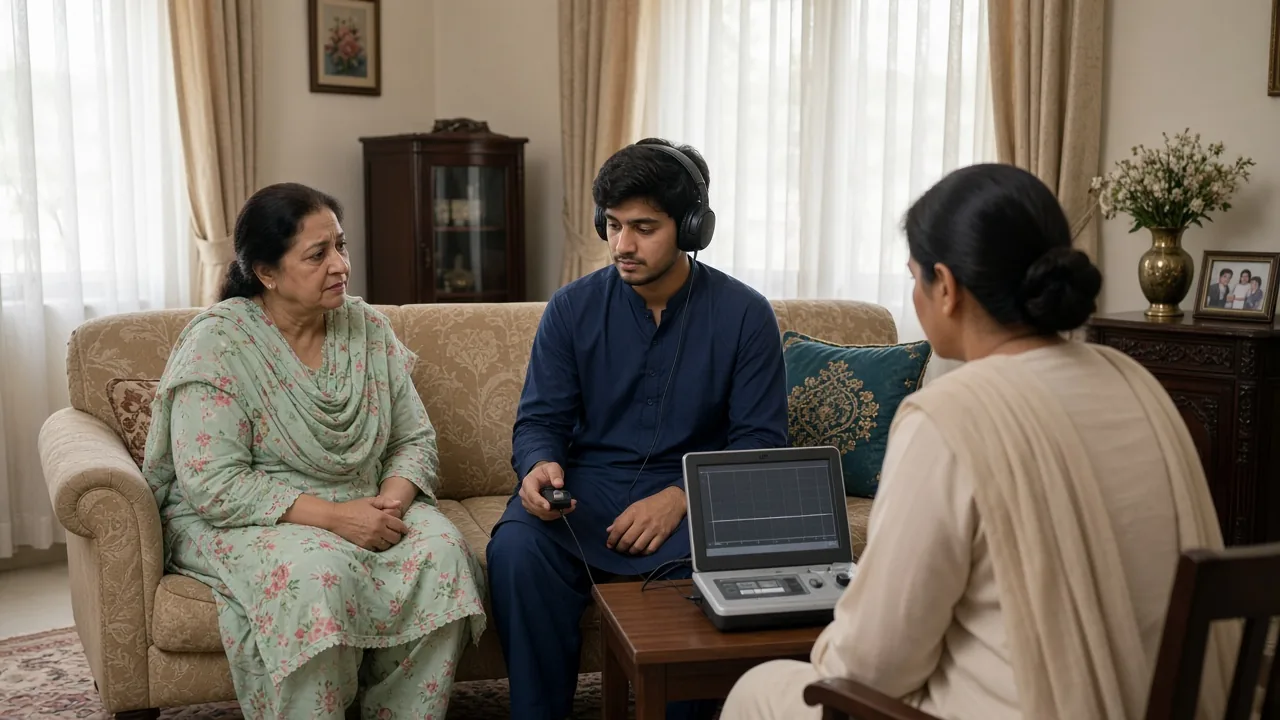
Hearing tests at home in Islamabad and Rawalpindi: how IRHC arranges it
IRHC sends an audiologist to your home with testing equipment, in almost all areas of Islamabad and Rawalpindi, Monday to Sunday. Every booking is confirmed on WhatsApp, and the results are explained to you at the end of the visit.
If you are looking for a hearing test in Islamabad or a hearing test in Rawalpindi, our hearing solutions cover adults, older family members, children and babies. Every test we do at the clinic can also be done at home. For people worried about earbud or noise damage, this typically means:
- Hearing tests at home: pure tone and speech audiometry, tympanometry and more, chosen to suit the person’s age and concern.
- Tinnitus assessment: offered through our partner setup, checking hearing alongside the ringing and its effect on daily life.
- Other options: partner clinics in G-8 Markaz, Islamabad and Saddar, Rawalpindi, by appointment, or an online video consultation.
A quiet room helps, so we may ask for the TV and fans to be switched off during the test. To book, call 051-8776556 (9 am to 6 pm), WhatsApp 0300-6844361 (answered 24/7) or use the online appointment form. Tell us the person’s age, the concern and your area. Not sure we cover it? Send your location on WhatsApp and we will confirm before booking. Fees depend on distance and time, so we give a quote. See our FAQs for payment methods.
Worried about ringing or muffled hearing?
IRHC arranges hearing tests at home in Islamabad and Rawalpindi, Monday to Sunday. Our team confirms every booking on WhatsApp. For fees, timings and payment methods, see our FAQs, or read more about our hearing solutions.
Book an appointment | WhatsApp 0300-6844361 | Call 051-8776556
Frequently Asked Questions
Quick answers to what people ask most about earbuds and hearing loss. For fees and payment, see our FAQs page.
Are earbuds bad for your hearing?
They can be, if you listen loud for long stretches. The earbuds are not the problem. Volume and time are. At a moderate volume with regular breaks, most people can use them without harm. Noise-induced hearing loss is permanent but preventable.
What volume is safe for earbuds?
WHO suggests no more than 60% of maximum volume, and says an average of 80 dB is safe for up to 40 hours a week, but 90 dB for only 4. The percentage is a guide only, because headphones differ. If you cannot hear someone speaking at arm’s length, it is too loud.
Can hearing loss from earbuds be reversed?
Short-term muffled hearing or ringing after loud sound often settles. Permanent noise-induced hearing loss does not come back, because inner-ear hair cells do not regrow. An audiologist can test what is left and discuss options such as hearing aids.
Is ringing in the ears after loud music a warning sign?
Yes. It means your ears were stressed. It often fades within a day or two, but if it stays, keeps returning or affects one ear, get your hearing tested. Ringing with sudden hearing loss needs a doctor the same day.
Are over-ear headphones safer than earbuds?
Not automatically. Any headphones can be played too loud. Well-fitted noise-cancelling ones let you keep the volume lower in noisy places, which helps. Whatever you use, keep the volume moderate and take breaks.
How much does a hearing test at home cost in Islamabad or Rawalpindi?
At IRHC there is no fixed price for hearing services. Fees depend on distance and time, so we quote when you call or WhatsApp with your area and what you need. Payment is in advance by Easy Paisa, JazzCash, U Paisa, Raast ID, bank transfer or cash.
Can ringing in the ears (tinnitus) be assessed at home?
Yes. IRHC offers tinnitus assessment at home through its partner setup. It checks your hearing alongside the ringing and how it affects daily life. Mention the ringing when you book.
How do I book a hearing test in Islamabad or Rawalpindi?
Call 051-8776556 (9 am to 6 pm), WhatsApp 0300-6844361 (answered 24/7), or use the online appointment form. Home visits run Monday to Sunday in almost all areas of both cities, and every booking is confirmed on WhatsApp.
Sources
- World Health Organization (WHO), Safe listening: questions and answers and Make Listening Safe
- National Institute on Deafness and Other Communication Disorders (NIDCD), Noise-Induced Hearing Loss and Sudden Deafness
- NHS, Tinnitus and Earwax build-up
- Apple Support, Headphone notifications on your iPhone, iPad, or Apple Watch
Medical disclaimer: This article is for general information only and does not replace an examination by a doctor or an assessment by a qualified audiologist. Noise-induced hearing loss cannot be reversed, and no test or product can promise to restore lost hearing.