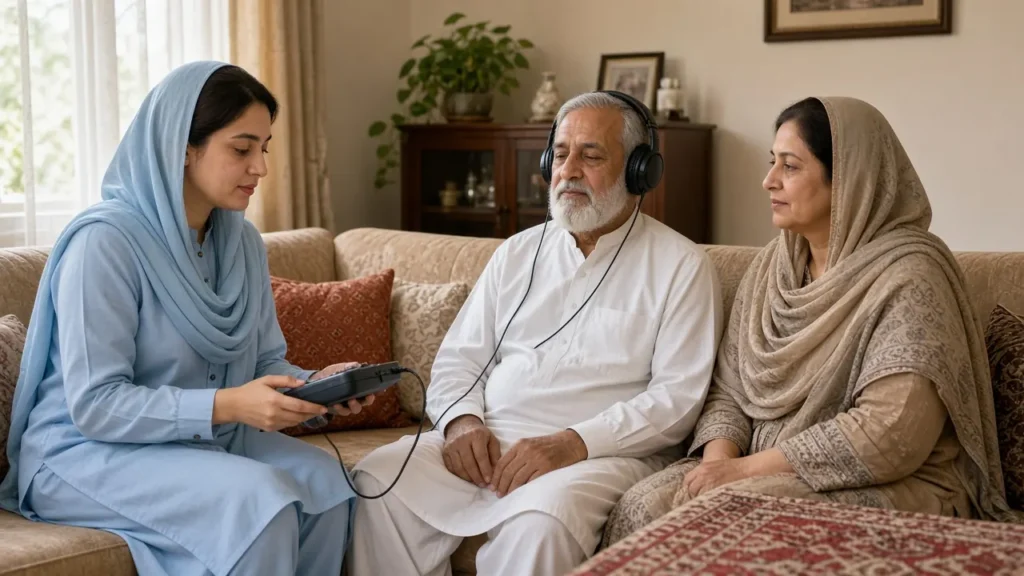
Short answer: With hearing care at home, the audiologist brings portable equipment to you, so most hearing tests can be done in your own house. In Islamabad and Rawalpindi, IRHC does pure tone and speech audiometry, tympanometry, OAE, BERA (ABR), ASSR and newborn hearing screening at home, Monday to Sunday, choosing tests to suit the person’s age.
This guide is general information for families. It is not a diagnosis or medical advice. If you are worried about your own or a family member’s hearing, speak to a qualified clinician.
For sudden hearing loss, ear pain with discharge, hearing loss after a head injury, or dizziness with hearing changes, see a doctor first.
In this guide
- What hearing care at home means
- Which hearing tests can be done at home
- Tests for adults and older children
- Tests for newborns and young children
- What happens during a home visit
- Signs you need a hearing test
- When to see a doctor first
- Hearing aids, FM systems and tinnitus
- How to book in Islamabad or Rawalpindi
- FAQs
Getting a hearing test sounds simple until you try to arrange one. Your father has stopped joining conversations at dinner but won’t sit in traffic to reach a clinic. Your newborn was never screened at the hospital. So the test keeps getting pushed to “next month”.
The good news is that hearing tests have become portable. This guide explains which tests exist, what each one checks, who it suits, and what a home visit in Islamabad or Rawalpindi looks like.
What does hearing care at home mean?
Hearing care at home means an audiologist visits your house with portable testing equipment instead of you travelling to a clinic. It covers hearing tests for babies, children and adults, plus hearing aid fitting, adjustment and repairs. It suits older adults, bedbound patients, newborns and anyone for whom travel is hard.
For many families, the clinic visit itself is the obstacle. Elderly parents tire quickly, and babies who need to be asleep for some tests rarely settle in a busy waiting room. At home, the person is relaxed and family members can sit in and ask questions. IRHC’s hearing care services in Islamabad and Rawalpindi include hearing tests at home in almost all areas of both cities, and every test done at the clinic can also be done at home.
Which hearing tests can be done at home?
With portable equipment, most standard hearing tests can be done at home. These include pure tone audiometry (PTA), air and bone conduction audiometry, speech audiometry, tympanometry, otoacoustic emissions (OAE), BERA (also called ABR), ASSR and newborn hearing screening. The audiologist chooses which ones to use based on age and the concern.
Some tests need the person to respond, such as pressing a button. Others record the ear’s response on their own, which is why they work for babies. Here is a quick comparison.
| Test | Who it is for | What it checks | At home with IRHC? |
|---|---|---|---|
| Pure tone audiometry (PTA) | Adults and older children who can respond | The softest sounds heard at different pitches | ✓ Yes |
| Air and bone conduction audiometry | Adults and older children | Which part of the ear a hearing loss comes from | ✓ Yes |
| Speech audiometry | Adults and older children | How well speech is heard and understood | ✓ Yes |
| Tympanometry | All ages, often young children | Eardrum and middle ear movement, such as fluid behind the eardrum | ✓ Yes |
| Otoacoustic emissions (OAE) | Newborns, babies and young children | The inner ear’s faint echo in response to sound | ✓ Yes |
| BERA / ABR | Babies, young children and anyone who cannot do a standard test | How the hearing nerve responds to clicks or tones | ✓ Yes |
| ASSR | Babies and young children, often with BERA | Hearing levels at specific pitches | ✓ Yes |
| Newborn hearing screening | Newborns | Whether a baby needs a full hearing assessment | ✓ Yes |
| Tinnitus assessment | Anyone with ringing, buzzing or hissing in the ears | Hearing alongside the tinnitus and its effect on daily life | ✓ Yes, through our partner setup |
Hearing tests for adults and older children
Adults and older children usually have pure tone audiometry, air and bone conduction testing and speech audiometry, often with tympanometry. Together these show how much hearing is affected, at which pitches, in which ear, and whether the problem sits in the middle ear, the inner ear or the hearing nerve.
Pure tone audiometry (PTA)
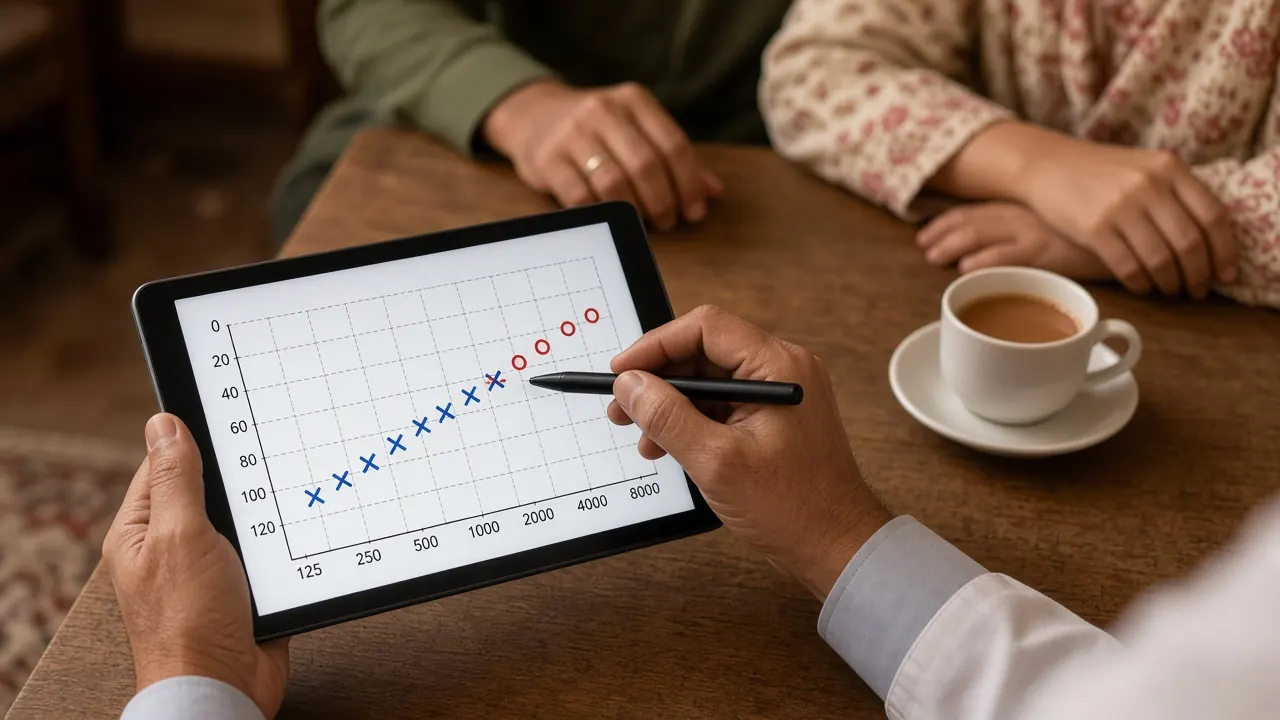
This is the test most people picture. You wear headphones and respond each time you hear a beep, even a faint one. The results are drawn on a chart called an audiogram, which shows the type and degree of any hearing loss in each ear.
Air and bone conduction audiometry
Air conduction plays sound through headphones. Bone conduction sends it through a small band behind the ear, skipping the outer and middle ear. Comparing the two shows where a hearing loss is coming from, which matters because a middle ear problem is handled very differently from inner ear damage.
Speech audiometry
Hearing a beep is not the same as following a conversation. Speech audiometry checks the softest speech you can hear and how well you recognise words. It often explains the familiar complaint, “I can hear you, I just can’t make out the words.”
Tympanometry
A soft probe sits in the ear canal while the air pressure is gently changed. It measures how the eardrum moves, which can show fluid behind the eardrum, a blocked ear tube or a hole in the eardrum. No response is needed, so it suits young children too.
Hearing tests for newborns and young children
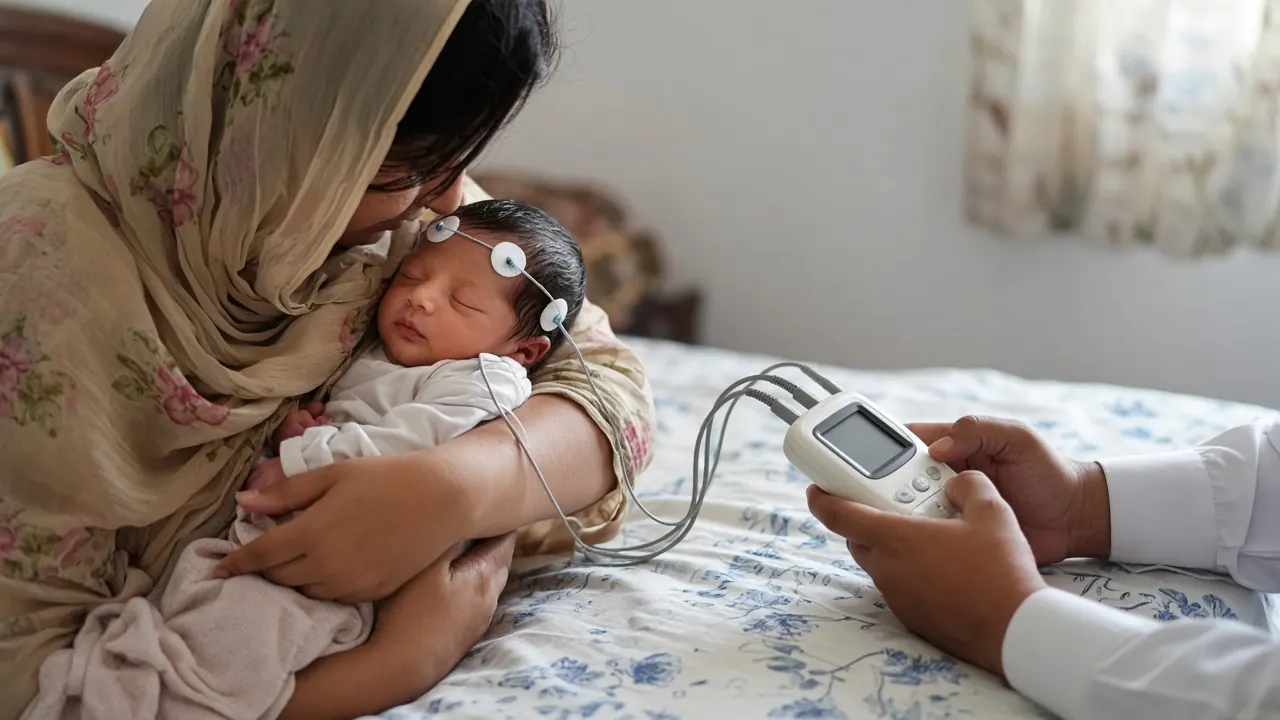
Babies and young children cannot press a button, so they are tested with methods that need no response: OAE, BERA (ABR) and ASSR, often with tympanometry. These record how the inner ear or hearing nerve reacts to sound. They work well when the child is calm or asleep, which is often easier at home.
International guidance from the CDC and the World Health Organization follows a simple “1-3-6” rule: screen every baby’s hearing by one month of age, complete a full assessment by three months if the screen is not passed, and start support by six months if hearing loss is confirmed. Pakistan does not yet have a universal newborn hearing screening programme, and a study published by WHO’s Eastern Mediterranean office found that many parents first sought professional advice when their child was already between 19 and 24 months old. If your baby was not screened at birth, a home screening closes that gap.
Newborn hearing screening
A quick check, usually with OAE or BERA equipment, while the baby is calm or asleep. It does not diagnose hearing loss. It tells you whether your baby needs a fuller assessment. A “refer” result does not always mean hearing loss, since fluid in the ear or a noisy room can affect it, but it should always be followed up.
Otoacoustic emissions (OAE)
A small, soft probe in the ear canal plays sounds and records the faint echo a healthy inner ear sends back. The baby does not have to do anything, and it is widely used for screening.
BERA (ABR) test
BERA stands for brainstem evoked response audiometry, and you will also hear it called ABR. Small sensors on the head record how the hearing nerve responds to clicks or tones. It is used for babies, young children, and anyone who cannot do a standard hearing test. A sleeping child gives the clearest result, so the audiologist may ask you to time the visit around a nap.
ASSR test
Auditory steady state response works like BERA, with sensors on the head, but it tests specific pitches. It is often done alongside BERA to estimate hearing levels in babies and young children.
What happens during a home hearing test?
A home hearing test follows the same steps as a clinic visit. The audiologist takes a history of the hearing concern, runs the tests that suit the person’s age, explains the results and suggests next steps. A quiet room helps, so the TV, fans and other noise may be switched off during testing.
- History. When did the problem start? One ear or both? Any ringing, ear infections or noise exposure?
- Tests. For an adult, this is usually pure tone and speech audiometry. For a young child, OAE and tympanometry are common, with BERA or ASSR when needed.
- Results. The type and degree of any hearing loss, and which ear is affected, explained in plain language.
- Next steps. That might be a hearing aid, adjusting an existing one, a follow-up test, or advice to see an ENT specialist if the results point to a medical cause.
A few practical tips: choose the quietest room in the house, keep earlier hearing reports and doctor’s notes handy, and if a hearing aid is already in use, have it ready too.
What are the signs you need a hearing test?
Book a hearing test if someone often asks people to repeat themselves, turns the TV up louder than others like, struggles in noisy places, or hears ringing in the ears. For children, book one if a baby does not react to loud sounds or a child’s speech is slow to develop.
Hearing loss often creeps up slowly, so family members may notice it first. Watch for:
- Asking “what?” a lot, or answering a different question from the one asked
- Avoiding phone calls or family gatherings
- Ringing, buzzing or hissing in one or both ears
- A hearing aid that no longer seems to help, or keeps whistling
If the concern is long hours of loud music through earbuds or headphones, our guide covers signs of noise-induced hearing loss and when to get tested.
In children, hearing and speech are closely linked. A child who does not turn when called, does not startle at loud noises, or is talking later than expected should have a hearing check. If speech is your main worry, our guide on late talkers and speech delay explains what is typical at each age, and a hearing test is often one of the first steps.
When should you see a doctor first?
See a doctor promptly for sudden hearing loss in one or both ears, ear pain, discharge from the ear, hearing loss after a head injury, or dizziness with hearing changes. These can point to a medical problem that needs treatment first. A hearing test can follow once a doctor has checked the ear.
Sudden hearing loss in particular should be treated as urgent. For gradual changes, a home hearing test is a sensible place to start, and the audiologist will tell you if the results suggest an ENT review.
After the test: hearing aids, FM systems and tinnitus support
If the test shows a hearing aid may help, IRHC supplies hearing aids through a partner setup, with fitting, adjustment, repairs and follow-ups. FM systems, which send a speaker’s voice straight to the listener, and tinnitus assessment are also offered through the same partner setup. Our team explains the options after the test.
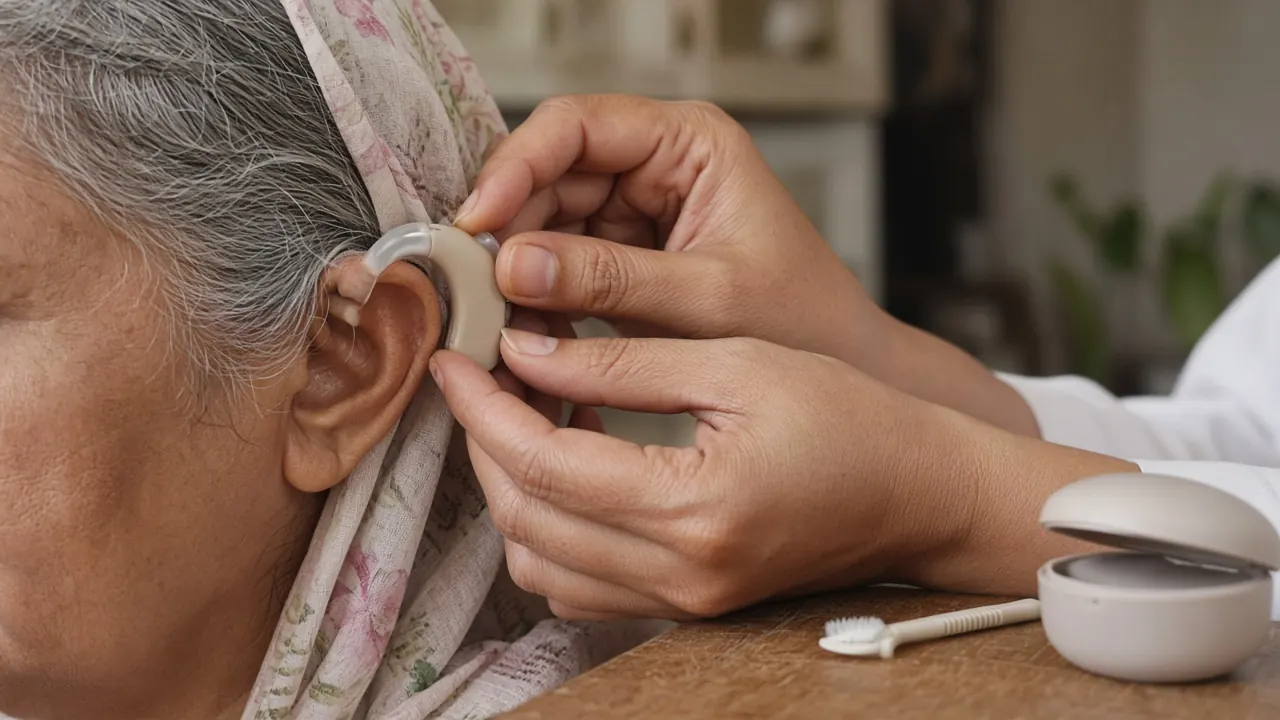
A hearing aid is only as good as its fitting. It is set up for the wearer’s own results, then adjusted when sounds feel too loud, too soft or unclear. If your current aid has stopped working or whistles, mention it when you book.
An FM system is a listening device, not a test. The speaker, often a teacher, wears a small microphone, which helps in noisy places like classrooms.
How to book a hearing test at home in Islamabad or Rawalpindi
To book a hearing test at home, call 051-8776556, send a WhatsApp message to 0300-6844361 (answered 24/7) or use the online appointment form. Share the person’s age, the hearing concern, your area and suitable days. Every booking is confirmed on WhatsApp, and visits run Monday to Sunday.
Fees depend on distance and time, so you get a quote for your area when you get in touch. Payment is made in advance by Easy Paisa, JazzCash, U Paisa, Raast ID, bank transfer or cash. For fee details and other common questions, see our FAQs.
Prefer a clinic? Our partner clinics are in G-8 Markaz, Islamabad and Saddar, Rawalpindi, by appointment. An online video consultation is also available.
Need a hearing test at home in Islamabad or Rawalpindi?
IRHC arranges home hearing visits for babies, children and adults, Monday to Sunday. Our team confirms every booking. For fees, timings and payment methods, see our FAQs, or read more about our hearing solutions.
Book an appointment | WhatsApp 0300-6844361 | Call 051-8776556
Frequently Asked Questions
Quick answers to what families ask most before booking a home hearing test. For fees and payment, see our FAQs page.
Can a hearing test be done at home?
Yes. With portable equipment, most hearing tests can be done at home. In Islamabad and Rawalpindi, IRHC does every hearing test at home that it does at the clinic, including pure tone audiometry, tympanometry, OAE, BERA, ASSR and newborn hearing screening.
Can a newborn baby have a hearing test at home?
Yes. Newborn hearing screening and tests that suit babies, such as OAE, BERA and ASSR, can be done at home. These tests work well while the baby is calm or asleep, so mention your baby’s age when you book.
What is the difference between a BERA test and an OAE test?
An OAE test records the faint echo the inner ear sends back when it hears sound. A BERA (ABR) test uses small sensors on the head to record how the hearing nerve responds to sound. Neither needs the child to respond, and they are often used together.
Do you provide hearing aids after the test?
Yes. Hearing aids are available through our partner (collaboration) setup, with fitting, adjustment, repairs and follow-ups. FM systems and tinnitus assessment are offered through the same partner setup.
How do I book a hearing test at home in Islamabad or Rawalpindi?
Call 051-8776556, WhatsApp 0300-6844361 (answered 24/7) or use the online appointment form. Share the person’s age, the hearing concern and your area. Every booking is confirmed on WhatsApp.
What should I keep ready for a home hearing test?
Keep any earlier hearing reports, doctor’s notes and the hearing aid (if one is used) ready, and choose a quiet room. The audiologist may ask for the TV or fans to be switched off during the test.
Sources
- Centers for Disease Control and Prevention (CDC), Screening for Hearing Loss and the EHDI 1-3-6 benchmarks
- World Health Organization, Deafness and hearing loss
- American Speech-Language-Hearing Association (ASHA), Hearing Loss in Adults: assessment
- Eastern Mediterranean Health Journal (WHO EMRO), Hearing impairment and its impact on children and parents in Pakistan
Medical disclaimer: This article is for general information only and does not replace an assessment by a qualified audiologist or doctor. Test choice depends on the person’s age and condition, and results should always be discussed with a clinician.